
Key Points
- Strict Bilateral Scope: State Minister for Foreign Affairs Humaiun Kobir emphasized that discussions on expanding the Bay of Bengal Industrial Growth Belt (“BIG-B”) initiative during Prime Minister Tarique Rahman’s official visit to Tokyo remained strictly bilateral between Dhaka and Tokyo, with no involvement or mention of third nations.
- No Reference to Regional Neighbors: The joint communique issued by both heads of government makes no mention of India, Nepal, or Bhutan, nor does it refer explicitly to drawing India’s northeastern states into the framework.
- Rejection of Third-Party Engagement: Kobir clarified that any negotiations involving third-party nations would mandate the direct presence of those countries’ official representatives at the negotiating table.
- Response to Opposition Sovereignty Concerns: Addressing comments from Opposition Leader Shafiqur Rahman regarding potential national sovereignty risks, Kobir urged political figures to read the official communique before making claims that the country’s interests had been compromised.
- Economic Partnership and Investment Commitments: The state minister detailed that Japan’s private sector plans to deploy 1 trillion yen ($6 billion) in investments over five years, with Bangladesh selecting financing options that preserve fiscal autonomy and national interest.
- Rohingya Repatriation Drive: Discussions covered the ongoing Rohingya humanitarian crisis, with Dhaka urging Tokyo to leverage its diplomatic influence in Myanmar to facilitate a safe and sustainable repatriation process.
Japan (Japan Daily News) October 30, 2026 – High-level diplomatic discussions between Bangladesh and Japan regarding the expansion of the Bay of Bengal Industrial Growth Belt (“BIG-B”) framework were conducted on an exclusively bilateral basis, without the involvement or inclusion of any third country. As reported by diplomatic correspondents covering the Ministry of Foreign Affairs briefing in Dhaka, State Minister for Foreign Affairs Humaiun Kobir confirmed on Friday that official summit talks in Tokyo between Prime Minister Tarique Rahman and Japanese Prime Minister Sanae Takaichi maintained a strict focus on direct economic cooperation between the two signatory nations.
- Key Points
- What Is the “BIG-B for Shared Prosperity” Framework Agreed Upon in Tokyo?
- How Did the Foreign Ministry Address Questions Regarding Regional Neighbors and Sea Lanes?
- What Investment and Financial Commitments Were Announced During the Summit?
- How Does the Agreement Address the Ongoing Rohingya Refugee Crisis?
- Background of the Particular Development After the News
- How This Development Can Affect National Policy, Local Industry, and Regional Trade Dynamics
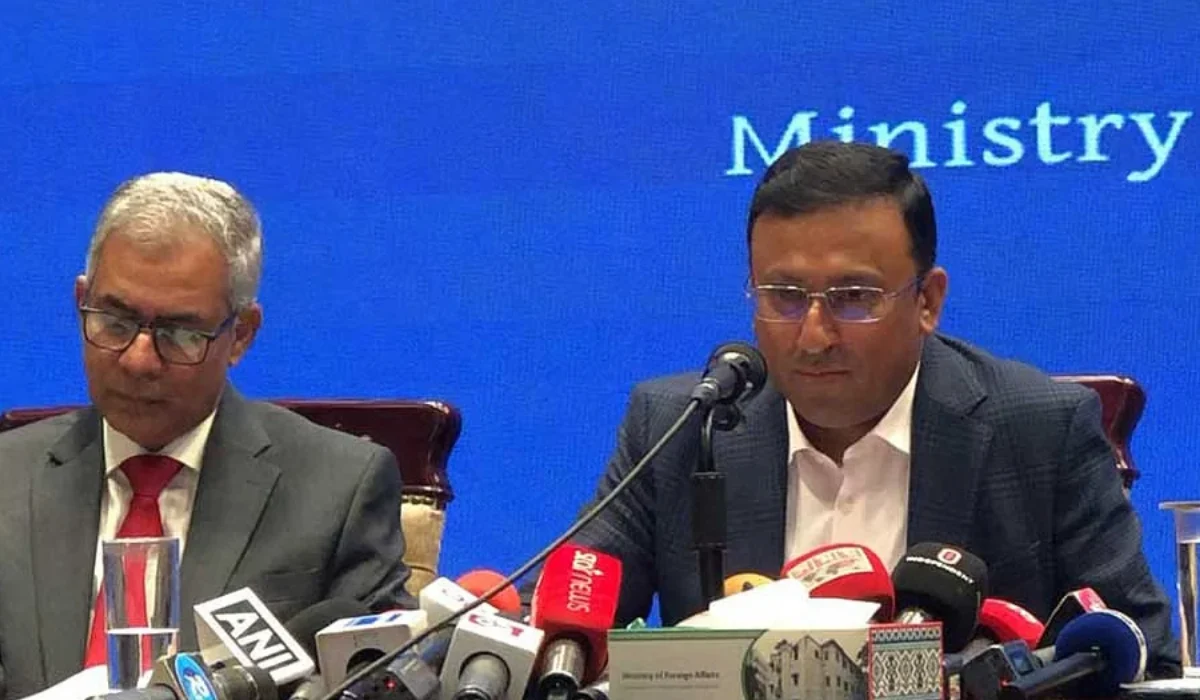
Addressing journalists while holding a physical copy of the official joint communique, State Minister Kobir dispelled speculation surrounding the potential integration of neighboring countries into the strategic framework. As reported by UNB and published in the Dhaka Tribune, State Minister Humaiun Kobir stated: “In the joint communique you will see that we mentioned Big-B was discussed as part of an exclusive economic partnership between Japan and Bangladesh, that is, two countries”. He noted that the diplomatic delegation made its position explicit to Japanese officials throughout the Tokyo summit, reiterating that Bangladesh engaged in discussions to focus specifically on the bilateral economic relationship.
The clarification comes following public inquiries regarding whether the maritime scope of Japan’s Free and Open Indo-Pacific (FOIP) strategy or broader Bay of Bengal sea lanes were negotiated. As reported by the Dhaka Tribune, State Minister Humaiun Kobir explained that “The Bay of Bengal is not ours alone. We have a big stake there, but it is not ours alone. So we need those stakeholders around the table. We went to discuss bilateral exclusivity, which is clearly mentioned in the joint statement. We held no other talks beyond that”. He added that the elected government, operating with a two-thirds parliamentary majority, maintains no scope to act against the public interest and will address all sensitive international affairs transparently through parliament.
Rebuffing political criticisms raised by Opposition Leader and Jamaat-e-Islami Ameer Shafiqur Rahman—who cautioned the administration against entering agreements that might compromise national sovereignty—Kobir called for responsible political discourse. As reported by domestic media titles, State Minister Humaiun Kobir stated that “Read the joint communique first and you will see there is nothing of the kind. If you declare in advance, without reading it, that the country has been sold, that becomes part of some other agenda”. Kobir asserted that the joint statement was achieved through rigorous negotiation, reflecting the government’s commitment to defending national dignity and sovereignty without subservience.
What Is the “BIG-B for Shared Prosperity” Framework Agreed Upon in Tokyo?
The Bay of Bengal Industrial Growth Belt (“BIG-B”) initiative, originally established as a joint infrastructure acceleration scheme, was officially upgraded during the Tokyo summit to a revised strategic cooperative initiative termed “BIG-B for Shared Prosperity”. The bilateral framework centers on developing the Matarbari-Maheshkhali area as a primary regional logistics, energy, and industrial hub anchored by the Matarbari Deep Sea Port.
According to the joint summit statement, the upgraded initiative rests upon four key functional pillars:
- Strengthening Infrastructure and Regional Connectivity: Constructing advanced transport corridors, high-speed rail links, and deep-sea port terminals to streamline trade flows.
- Disaster Preparedness and Risk Mitigation: Enhancing technical resilience against natural disasters and geopolitical risks along coastal trade routes.
- Public-Private Partnership Expansion: Mobilizing private sector capital from Japanese conglomerates to build manufacturing hubs and tech parks within special economic zones.
- Trade and Energy Integration: Accelerating the early entry into force of the Japan-Bangladesh Economic Partnership Agreement (EPA) to remove trade barriers.
How Did the Foreign Ministry Address Questions Regarding Regional Neighbors and Sea Lanes?
During the ministry briefing, media representatives questioned whether the framework was intended to link Bangladesh’s maritime infrastructure directly with India’s northeastern landlocked states, Nepal, or Bhutan. State Minister Humaiun Kobir clarified that while regional connectivity remains an ongoing topic in broader South Asian economic discussions, no third-country arrangements were introduced or agreed upon during the Tokyo talks.
Kobir stated that sovereign diplomatic protocol dictates that any multilateral framework involving regional partners requires those nations to be seated as active participants at the negotiating table. Consequently, the Tokyo summit dealt strictly with bilateral investment pledges, security-contributing official development assistance (ODA) for maritime patrol vessels, and bilateral trade mechanisms.
What Investment and Financial Commitments Were Announced During the Summit?
The bilateral talks produced substantial financial and commercial commitments aimed at shifting Bangladesh from a historical reliance on concessionary loans toward an equal investment partnership. Japanese Prime Minister Sanae Takaichi confirmed that Japanese private sector investments in Bangladesh are projected to reach approximately 1 trillion yen ($6 billion) over the next five years, generating an estimated 200,000 domestic jobs.
Addressing questions regarding financing terms and interest rates attached to private capital flows, State Minister Humaiun Kobir stated that the Bangladeshi government will conduct an inter-ministerial review before hosting an incoming Japanese trade mission in Dhaka. Kobir emphasized that Bangladesh retains full flexibility to select investment projects featuring competitive terms that create sustainable local employment while preserving long-term fiscal stability.
How Does the Agreement Address the Ongoing Rohingya Refugee Crisis?
The situation regarding displaced Rohingya populations residing in southeastern Bangladesh formed a central component of the diplomatic agenda in Tokyo. Prime Minister Tarique Rahman met with the Chairman of the Nippon Foundation, who serves as Japan’s Special Envoy for Asian Affairs and Rohingya Reconciliation, to discuss sustainable solutions.
State Minister Kobir reiterated that Bangladesh views the Rohingya crisis as a critical national security issue that must be resolved through direct repatriation to Myanmar. Because the ultimate solution resides within Myanmar’s domestic borders, Bangladesh officially requested Japan—leveraging Tokyo’s established diplomatic channels with Naypyidaw—to play an active role in creating conditions conducive to safe, voluntary, and dignified returns.
Background of the Particular Development After the News
The Bay of Bengal Industrial Growth Belt (“BIG-B”) concept was first conceptualized in 2014 under Japanese international cooperation frameworks to transform Bangladesh’s southeastern coastal belt into an industrial gateway connecting South Asia with Southeast Asian markets. Central to this initiative was the construction of the Matarbari Deep Sea Port and associated power plants, designed to overcome navigation depth limitations at the traditional Port of Chattogram.
Following political changes in Dhaka in early 2026 and the election of Prime Minister Tarique Rahman’s administration, the foreign ministry prioritized recalibrating the nation’s diplomatic footprint. The official state visit to Tokyo from October 26 to October 29, 2026, marked the new government’s first major high-level summit with a G7 economic partner. The resulting joint statement sought to modernize the 2014 framework into “BIG-B for Shared Prosperity,” placing elevated focus on high-tech collaboration, economic partnership agreements (EPA), and private sector equity investments rather than traditional foreign aid reliance.
How This Development Can Affect National Policy, Local Industry, and Regional Trade Dynamics
The diplomatic outcome of the Bangladesh-Japan summit and the subsequent policy clarifications issued by the Foreign Ministry are expected to produce tangible impacts across domestic and international sectors:
1. For Bangladeshi Industry and the Domestic Job Market
- Capital Influx in High-Tech and Logistics: The projected 1 trillion yen ($6 billion) private investment push will accelerate the development of industrial parks, high-speed transit, and deep-sea port logistics around Matarbari and Maheshkhali, creating up to 200,000 specialized technical jobs.
- Transition to Strategic Commercial Partnerships: The formalization of the Japan-Bangladesh Economic Partnership Agreement (EPA) will assist local exporters in maintaining preferential market access as Bangladesh transitions out of Least Developed Country (LDC) status.
2. For Domestic Political Stability and Parliamentary Oversight
- Heightened Public Scrutiny of Foreign Agreements: The government’s pledge to present international agreements transparently to parliament will establish a higher standard of legislative review for large-scale infrastructure and loan commitments.
- Defusal of Sovereignty Debates: Clear documentation demonstrating that the “BIG-B” framework remains strictly bilateral mitigates domestic political friction, preventing opposition parties from framing infrastructure projects as concessions of territorial autonomy.
3. For South Asian Maritime Strategy and Bay of Bengal Logistics
- Strengthened Independent Maritime Identity: By maintaining a strictly bilateral agreement with Japan, Bangladesh preserves its strategic autonomy, establishing Matarbari as a neutral, high-capacity commercial logistics center in the Bay of Bengal without becoming entangled in regional power blocs.
- Diplomatic Pressure on the Rohingya File: Japan’s active diplomatic participation as a mediator could incentivize Myanmar authorities to reopen formal discussions on structured refugee repatriation timelines.