
Key Point
- Wales secured a hard-fought 19-0 win over Japan to earn their second victory of the WXV campaign.
- Scrum-half Seren Lockwood scored two tries (35th minute and 77th minute) to lead Wales to victory in challenging conditions.
- Swirling wind, heavy rain, and high humidity in Tokyo created difficult playing conditions for both world-ranked teams (Wales ranked 11th, Japan ranked 12th).
- Welsh centre Freya Bell suffered a serious-looking knee injury and was stretchered off in the second half.
- Wales recorded their first clean sheet in international rugby since defeating Hong Kong 65-0 in November 2018.
- The two nations will face each other again in Kumagaya City on Saturday, 31 October.
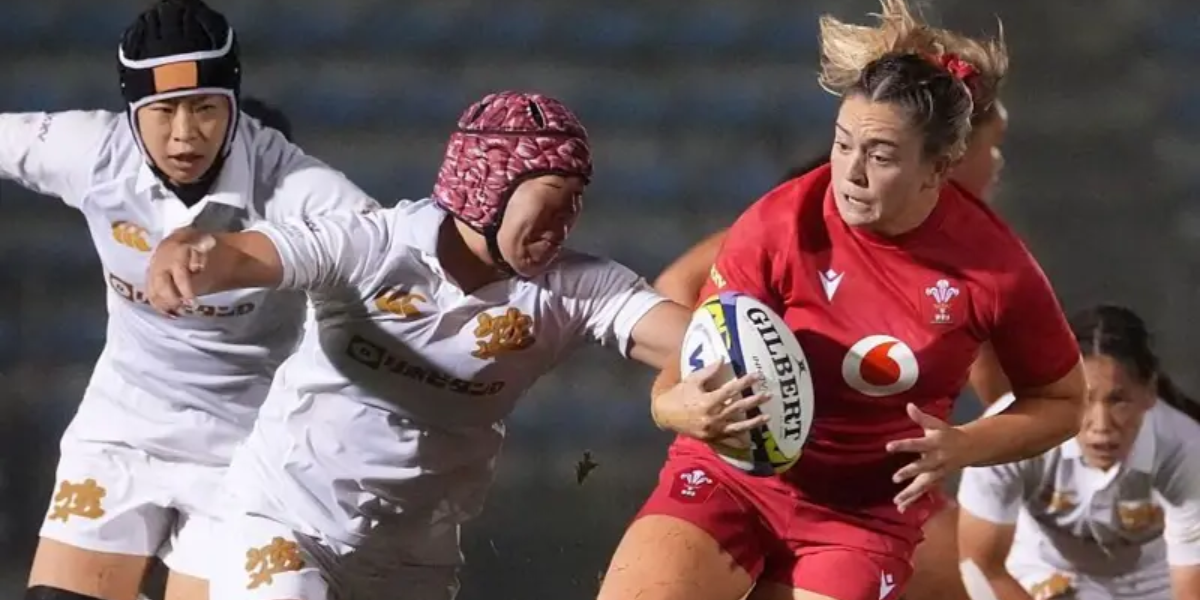
Tokyo (Japan Daily Sun) May 15, 2026 – Wales ground out a gritty 19-0 victory over Japan in challenging Tokyo weather conditions to claim their second win of the WXV campaign. In a battle between sides ranked 11th and 12th in the world, Sean Lynn’s side overcame swirling winds, rain, and intense humidity to overcome a disciplined Japanese defensive effort. Despite a disjointed attacking display compared to their recent 74-point scoring sprees against South Africa and the United States, Wales relied on forward dominance and bench depth to secure the result and achieve their first clean sheet since November 2018.
What Happened During the First Half in Tokyo?
The fixture formed part of a double-header alongside the Japanese men’s national team to mark the centenary of Japanese rugby. However, early discipline issues hampered the hosts’ celebratory atmosphere. Flanker Nami Asari was sent to the sin-bin just six minutes into the match, placing Japan under immediate pressure.
Wales attempted to capitalize on the numerical advantage straight away from a five-metre lineout. Hooking option Kelsey Jones peeled off the set-piece to cross the try line for what appeared to be her ninth international try. However, following a video review, lock Jorja Aiono was penalised for obstruction, wiping the score off the board.
Japan responded with concerted attacking phases of their own. Front-row forward Wako Kitano was held up over the line following key defensive interventions from Freya Bell and Sisilia Tuipulotu. Despite Japan patiently cycling through phases, Wales held firm in defence, though their own attack struggled with wayward kicking and handling errors in the wet conditions.
The opening deadlock was broken five minutes before the interval. Off a driving lineout, Bell carried powerfully up to the line. Scrum-half Seren Lockwood reacted quickly at the breakdown, spotting a gap in the defensive guard to score in the 35th minute. The converted try gave Wales a 7-0 lead heading into the half-time break.
How Did Wales Secure the Win in the Second Half?
Japan emerged for the second half with renewed attacking intent, forcing Wales to miss several tackles in open play. The visitors were dealt a major blow early in the second period when centre Freya Bell suffered a severe knee injury and was stretchered off the field, replaced by Courtney Keight.
Head coach Sean Lynn adjusted his side before the hour mark, introducing fly-half Lleucu George to regain territorial control. The backline reshuffle yielded results in the 65th minute during a rare entry into Japan’s 22-metre zone. Off a driving maul from lineout ball, Kelsey Jones drove over to extend the Welsh advantage.
Wales thought they had added a third try shortly after when Lockwood won the chase to Keira Bevan’s kick through, but video replays showed Jones had committed an offside infraction during the preceding turnover.
With Japan’s Nami Yoshida yellow-carded in the 76th minute, Wales capitalized on the advantage. Three minutes from time, George delivered a floating pass out wide to makeshift winger Lockwood, who finished well to collect her second try of the match. Wales pressed for a late bonus-point try but settled for a 19-0 victory.
Match Lineups
Japan: Nishi; Tsunokawa, Langford, Kataoka, Nishimura; Tsukui (captain), Harada; Komaki, Nagaoka, Kitano, Kawamura, Sato, Asari, Korai, Bodman.Replacements: Nagata, Yoshida, Fuji, Yoshimura, Jennifer, Seo, Ito, Havili Kagawa.Sin Bin: Asari (6 min), Yoshida (76 min).
Wales: Neumann; N Metcalfe, Cox, Bell, A Williams; Bevan, Lockwood; M Davies, K Jones, Tuipulotu, B Metcalfe, Aiono, K Williams (co-captain), Callender (co-captain), King.
Background of the Development
This Test match took place as part of the ongoing WXV tournament structure, designed to provide regular competitive international fixtures between mid-tier rugby nations. Prior to this encounter, Wales had scored 74 points across two dominant performances against South Africa and the United States, marking a resurgence under head coach Sean Lynn.
Japan entered the match following two narrow losses to Ireland, showing tactical discipline but suffering from recurring disciplinary infractions on the pitch. The fixture carried additional historical significance as part of Japan Rugby Football Union’s centenary celebrations, hosted alongside the men’s national team in Tokyo. The upcoming second Test in Kumagaya City on Saturday, 31 October, provides an immediate rematch opportunity for both nations.
Prediction: How Will This Result Affect Both Squads Moving Forward?
For Wales, this victory demonstrates an ability to win under adverse environmental conditions without relying solely on expansive backline play. The result reinforces their defensive structure, yielding a first shut-out since their 65-0 win over Hong Kong in 2018. However, the likely long-term loss of centre Freya Bell to a knee injury will test Wales’ squad depth in the midfield for the remainder of the campaign.
For Japan, the match highlights key areas requiring immediate correction ahead of the 31 October rematch in Kumagaya City. While their phase play and defensive resilience showed promise, repeated discipline issues—resulting in two yellow cards—continuously disrupted their operational momentum. If Japan can rectify their tackle height and breakdown discipline, they remain well-positioned to challenge Wales more closely in cleaner playing conditions.