Key Points
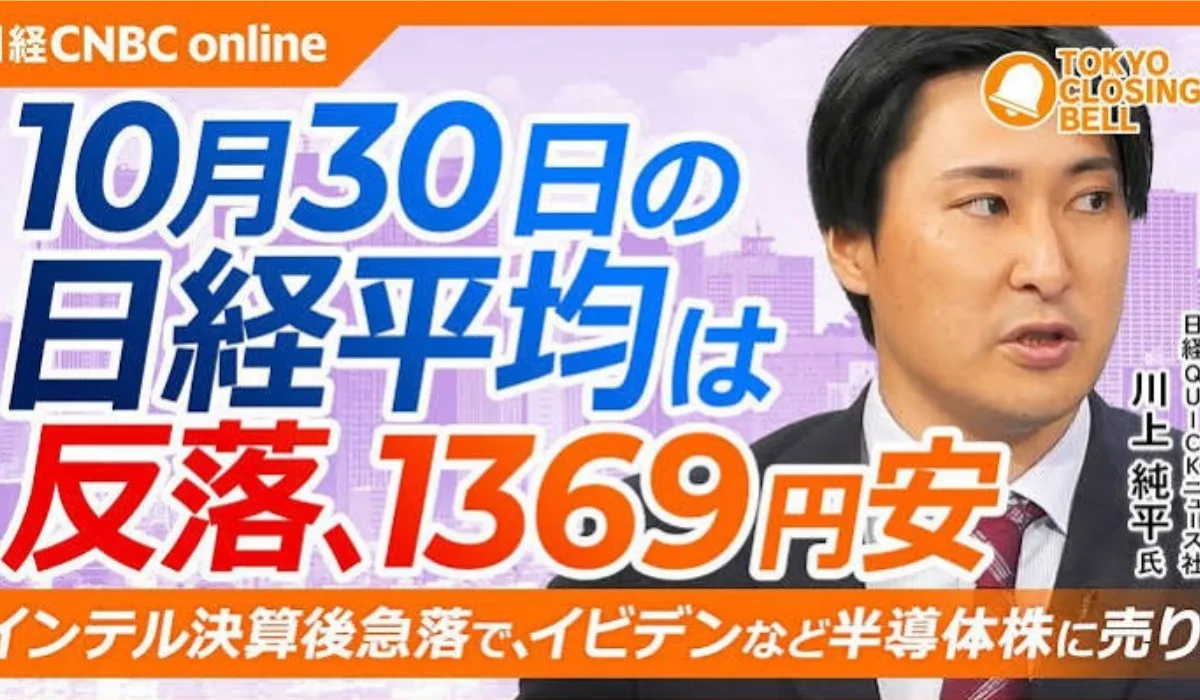
- Nikkei Benchmarks Decline sharply: Japan’s benchmark Nikkei 225 Stock Average plummeted 1,369.36 points, or 2.12%, to close at 63,290.11 on Friday, 30 October 2026, ending a three-day winning streak amidst global tech liquidation.
- Tech and Semiconductor Collapse: Selling pressure focused on chip equipment and artificial intelligence infrastructure stocks, with Ibiden falling by its daily limit of 15.21%, Fujitsu dropping 16.20%, and Lasertec tumbling 8.81%.
- Bank of Japan Holds Interest Rates: The Bank of Japan (BOJ) maintained its benchmark short-term interest rate at 1.25% in an 8–1 vote, while board member Hajime Takata dissented in favor of a rate hike to 1.50%.
- Accelerated ETF Divestment: The central bank unanimously agreed to accelerate the sale of its accumulated exchange-traded funds (ETFs) as part of ongoing balance-sheet normalization.
- Mixed Economic Indicators: Fresh government data showed Tokyo’s core consumer price index (CPI) slowed slightly to 2.6% in October, while September industrial production recovered with a 2.2% monthly increase, and the national unemployment rate dropped to 2.4%.
- Broader Market Divergence: Despite the tech slump, consumer, entertainment, and travel shares advanced, with Konami Group surging 15.02%, Oriental Land rising 8.45%, and ANA Holdings gaining 6.31%.
Japan (Japan Daily News) October 30, 2026 – Japanese equity markets experienced a major selloff on Friday, with the benchmark Nikkei 225 Stock Average plunging 1,369.36 points, or 2.12%, to finish at 63,290.11 at the close of trading in Tokyo. As reported by financial correspondents monitoring the Tokyo Stock Exchange (TSE), the steep decline abruptly halted a three-day rally, driven by an international selloff across artificial intelligence (AI) and semiconductor equipment sectors, alongside the Bank of Japan’s (BOJ) decision to hold short-term interest rates steady at 1.25%.
- Key Points
- What Triggered the Massive Tech and Semiconductor Selloff on the Tokyo Stock Exchange?
- Why Did the Bank of Japan Decide to Keep Interest Rates Unchanged at 1.25%?
- Which Stock Sectors Defied the Market Downturn on 30 October 2026?
- How Did the Japanese Currency and Macroeconomic Indicators React?
- Background of the Particular Development After the News
- How This Development Can Affect Institutional Investors, Technology Firms, and Japanese Households
The sharp downturn in Tokyo followed negative momentum on Wall Street from 29 October, where global investors re-evaluated high technology valuations and questioned the near-term profitability of massive AI capital expenditures. In Tokyo, the losses were concentrated among major technology component suppliers and chip testing manufacturers. Ibiden, a prominent semiconductor package substrate producer, plummeted by its daily limit of 1,500 yen (down 15.21%) to close at 8,359 yen. Electronics giant Fujitsu plunged 16.20% to 3,622 yen, while semiconductor testing equipment leader Lasertec dropped 8.81% to 37,700 yen. The broader Topix Index also slid 0.95%, or 38.21 points, to settle at 3,965.07, despite resilient buying in travel and entertainment equities.
Concurrently, the Bank of Japan concluded its two-day monetary policy meeting, voting 8–1 to keep the key policy interest rate unchanged at 1.25%. Policy board member Hajime Takata cast the sole dissenting vote, advocating for an immediate policy rate hike to 1.50%. Addressing reporters during a post-meeting press conference in Tokyo, Bank of Japan Governor Kazuo Ueda clarified that underlying inflation had not yet stabilized at the central bank’s 2% target, emphasizing that future monetary tightening schedules would depend entirely on upcoming economic data, wage trends, and global market stability. The central bank also voted unanimously to accelerate the pace of sales for its massive exchange-traded fund (ETF) portfolio accumulated during years of aggressive quantitative easing.
Economic data released on 30 October presented a complex operational landscape for Japanese policymakers. Core consumer inflation in Tokyo slowed to 2.6% year-on-year in October, down from 2.7% in September, remaining above the BOJ’s target. On the industrial front, September manufacturing output rebounded by 2.2% month-on-month, beating expectations, while Japan’s national unemployment rate ticked down to 2.4%. However, retail sales grew by a lower-than-expected 2.3% in September, pointing to ongoing household spending pressures amid elevated living costs.
What Triggered the Massive Tech and Semiconductor Selloff on the Tokyo Stock Exchange?
The selloff across Tokyo’s technology sector stemmed directly from overnight reassessments on Wall Street, where the Nasdaq Composite index dropped 1.38% on 29 October. Global institutional investors began pulling back capital from AI hardware and semiconductor supply chain equities, citing concerns over the timeline for major tech conglomerates to generate returns on AI infrastructure investments.
Because Japanese tech giants and precision equipment manufacturers form a core component of the Nikkei 225 index weight, the global sentiment shift triggered rapid selling in Tokyo. In addition to Ibiden, Fujitsu, and Lasertec, selling pressure affected major technology component suppliers and semiconductor testing firms across the Prime Market. Total daily turnover on the Tokyo Stock Exchange’s Prime Market reached 8.47 trillion yen, with 2.50 billion shares changing hands ahead of a long weekend in Japan.
Why Did the Bank of Japan Decide to Keep Interest Rates Unchanged at 1.25%?
The Bank of Japan opted to maintain its benchmark short-term interest rate at 1.25% to assess the durability of domestic wage growth, underlying consumption patterns, and ongoing international economic risks.
Governor Kazuo Ueda noted during his press conference that while inflation pressures remain present, underlying price growth has not yet sustainably hit the bank’s 2% target. The 8–1 vote highlighted internal debate, with board member Hajime Takata arguing that economic conditions warranted an immediate increase to 1.50%. Nevertheless, the central bank raised its long-term inflation outlook and affirmed its policy intent to gradually normalize monetary policy if economic output and wages continue to meet projections.
Which Stock Sectors Defied the Market Downturn on 30 October 2026?
Despite the broader market retreat, non-technology sectors recorded strong buying activity following positive corporate earnings reports and consumer demand forecasts:
- Entertainment and Gaming: Konami Group jumped 15.02% to close at 26,385 yen following strong quarterly earnings performance.
- Leisure and Tourism: Oriental Land Co., operator of Tokyo Disneyland and Tokyo DisneySea, rose 8.45% to finish at 3,438 yen.
- Aviation and Transport: Flag carrier ANA Holdings gained 6.31% to close at 3,043 yen, driven by sustained international passenger volume.
How Did the Japanese Currency and Macroeconomic Indicators React?
Currency markets exhibited brief volatility following the BOJ’s rate announcement. The US dollar traded around 157.61 yen in afternoon Tokyo trading, slightly down from 157.71 yen in New York late Thursday. While a stronger yen dampens exported earnings for major Japanese manufacturers and automakers, it provides relief for domestic consumers by reducing the cost of imported raw materials, food, and energy products.
Macroeconomic data published on Friday reflected a steady real economy:
- Tokyo Core CPI: Rose 2.6% year-on-year in October, down slightly from 2.7% in September.
- Industrial Production: Increased 2.2% month-on-month in September, rebounding from August’s 2.4% contraction.
- Unemployment Rate: Dropped to 2.4% in September, with the job-openings-to-applicants ratio rising to 1.19.
- Retail Sales: Expanded 2.3% year-on-year in September, reflecting stable yet cautious household consumption.
Background of the Particular Development After the News
The October 30 market correction marks a notable consolidation period for Japanese equities following a multi-year rally that saw the Nikkei 225 reach historical highs near 68,956 in mid-2026. The index’s rapid surge over recent years was propelled by corporate governance reforms initiated by the Tokyo Stock Exchange, a weak yen boosting exporter revenues, and massive foreign capital inflows into Japan’s semiconductor supply chain.
Simultaneously, the Bank of Japan has been executing a gradual departure from its decade-long ultra-loose monetary regime. After ending its negative interest rate policy and yield curve control (YCC) mechanisms earlier, the central bank transitioned toward incremental interest rate increases, raising short-term rates to 1.25%. The BOJ’s decision to accelerate the unwinding of its massive ETF portfolio represents another key step toward normalizing its financial footprint and reducing central bank intervention in stock market pricing.
How This Development Can Affect Institutional Investors, Technology Firms, and Japanese Households
The combination of technology sector volatility, steady interest rates, and accelerated central bank ETF sales is anticipated to influence several market segments:
1. For Institutional Investors and Technology Equities
- Shift toward Fundamental Earnings Verification: Institutional funds are likely to exercise greater selectivity with high-valuation AI hardware suppliers, demanding clear evidence of order backlogs and revenue conversion before rebuilding long positions.
- Increased Equity Market Volatility: As the BOJ accelerates the offloading of its ETF holdings into the open market, equity indices may experience increased localized volatility during major global rebalancing periods.
2. For the Bank of Japan and Corporate Borrowers
- Potential Winter Rate Hike: With Tokyo core inflation remaining above 2.5% and industrial production recovering, money markets will increasingly price in an interest rate hike to 1.50% at upcoming BOJ policy meetings in late 2026 or early 2027.
- Rising Corporate Financing Costs: Japanese enterprises reliant on domestic debt will face higher borrowing costs, encouraging companies to prioritize balance sheet efficiency and debt management.
3. For Japanese Consumers and Exporters
- Pressure on Domestic Purchasing Power: Persistent core inflation above the BOJ’s 2% target will continue to strain household budgets until real wage growth outpaces headline consumer price increases.
- Exporters’ Margin Sensitivity: A fluctuating US dollar/yen exchange rate around the 157 level will force major export manufacturers to maintain conservative currency hedges to protect overseas earnings margins.