Key Points
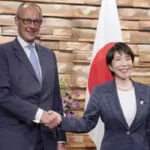
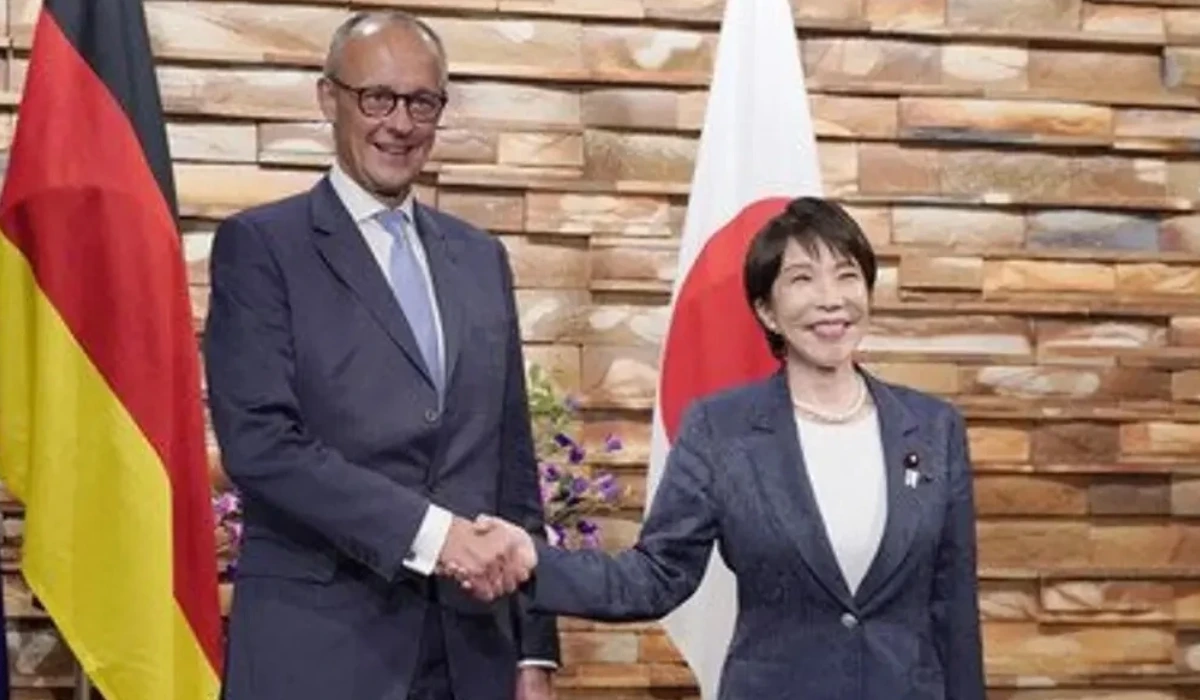
- Bilateral Strategic Framework: Japanese Prime Minister Sanae Takaichi and German Chancellor Friedrich Merz signed joint declarations in Tokyo to deepen economic security, cutting-edge technology integration, and defense cooperation.
- Critical Mineral Diversification: The two nations agreed to diversify critical mineral supply chains, protect sensitive dual-use technologies, and enhance the interchangeability of rare earths within their respective automotive industries.
- 33 Memorandums Signed: Accompanied by a delegation of approximately 30 corporate executives, Chancellor Merz witnessed the signing of 33 memorandums of understanding spanning artificial intelligence, nuclear fusion, and advanced industrial applications.
- Opposition to Economic Coercion: Both leaders expressed serious concern regarding arbitrary export restrictions on strategic materials and vowed to prevent strategic economic dependencies from being weaponized for geopolitical leverage.
- Indo-Pacific Alignment: Emphasizing that Euro-Atlantic and Indo-Pacific security are “inseparable,” the leaders pledged stronger coordination via the Shanghai and regional frameworks while addressing threats linked to China’s hegemony and Russia’s ongoing war in Ukraine.
Japan (Japan Daily News) October 28, 2026 – Japan and Germany agreed to significantly deepen their economic, defense, and technological partnerships during a bilateral summit held at the Prime Minister’s Office in Tokyo on Wednesday. Japanese Prime Minister Sanae Takaichi and German Chancellor Friedrich Merz issued joint declarations on economic security and advanced technologies, establishing a structured framework to reduce strategic dependencies on dominant suppliers, safeguard sensitive dual-use capabilities, and diversify critical raw material supply chains. Accompanied by a delegation of 30 German business leaders, Chancellor Merz oversaw the signing of 33 memorandums of understanding covering artificial intelligence and nuclear fusion, marking a major effort by two of the world’s leading industrial democracies to insulate their economies against geopolitical coercion.
- Key Points
- What Accord Did Prime Minister Sanae Takaichi and Chancellor Friedrich Merz Reach in Tokyo?
- How Are Japan and Germany Addressing Critical Minerals and Economic Coercion?
- What Is the Scope of the 33 Industrial and Technological Memorandums Signed in Tokyo?
- Background of Japan-Germany Security and Economic Relations
- How the Bilateral Agreement Will Affect Global Supply Chains and Industrial Sectors
What Accord Did Prime Minister Sanae Takaichi and Chancellor Friedrich Merz Reach in Tokyo?
The bilateral summit held on 28 October 2026 at the Kantei marked Chancellor Friedrich Merz’s first official visit to Japan since taking office in May 2025. The talks culminated in the formal adoption of three key documents: the “Japan-Germany Joint Leaders’ Statement,” the “Japan-Germany Joint Declaration on Advanced Technology Cooperation,” and the “Japan-Germany Joint Declaration on Economic Security Cooperation”.
As reported by Spencer Landers of The Japan Times, Japanese Prime Minister Sanae Takaichi emphasized that both nations are committed to protecting high-tech capabilities while securing essential industrial inputs.
Speaking during a joint press appearance in Tokyo, Japanese Prime Minister Sanae Takaichi stated:
“Japan and Germany will work to diversify sources of critical minerals and develop alternative supply sources, while also taking steps to protect critical technologies.”
Addressing the broader geopolitical reality connecting Europe and Asia, Prime Minister Takaichi underscored the interdependence of global security, stating that security in the Euro-Atlantic region and the Indo-Pacific region is “inseparable”.
For his part, Chancellor Friedrich Merz underlined that both nations share core interests and values, highlighting that cooperative action between Tokyo and Berlin serves as a crucial counterweight to unilateral assertiveness by major powers.
As reported by Nippon.com, German Chancellor Friedrich Merz stated:
“Japan, the European Union, and Germany have all come to realize that we must reduce one-sided dependencies, whether in our supply chains or regarding raw materials.”
How Are Japan and Germany Addressing Critical Minerals and Economic Coercion?
A central pillar of the agreements signed in Tokyo focuses on mitigating vulnerabilities associated with critical raw materials, particularly rare earth elements essential for automotive manufacturing, green energy infrastructure, and defense systems. China currently maintains a dominant position in global rare earth processing and has increasingly tightened export controls on dual-use items that possess both civilian and military applications.
As reported by Demokratis, the joint statement released by both governments explicitly condemned the weaponization of trade and supply channels, stating:
“We have grave concerns about the increasing use of economic coercion, such as arbitrary export restrictions and retaliatory measures on critical minerals.”
To counteract these pressures, the Joint Declaration of Intent on critical minerals outlines specific mechanisms to promote joint offtake agreements, co-finance overseas extraction projects, expand recycling initiatives, and establish strategic stockpiles. Furthermore, the accord calls for enhancing the interchangeability of rare earth components within the Japanese and German automotive manufacturing sectors to minimize production bottlenecks caused by sudden export restrictions.
Addressing an economic forum in Tokyo prior to his summit meeting, Chancellor Merz rejected protectionist tendencies and advocated for rules-based global trade.
As reported by Demokratis, German Chancellor Friedrich Merz stated:
“De-risking, diversification, and strengthening our resilience are the imperatives of the hour.”
What Is the Scope of the 33 Industrial and Technological Memorandums Signed in Tokyo?
The summit was characterized by substantial private-sector involvement. Chancellor Merz arrived in Japan accompanied by a high-level corporate delegation comprising approximately 30 executive leaders representing Germany’s industrial, automotive, and technological sectors.
As reported by Jiji Press and published via Nippon.com, Japanese and German representatives finalized a total of 33 memorandums of understanding (MOUs) aimed at advancing joint research, industrial commercialization, and regulatory alignment across frontier technologies.
The signed MOUs encompass several critical domains:
- Artificial Intelligence (AI): Setting common standards for trustworthy AI deployment and collaborating on high-performance computing applications.
- Nuclear Fusion & Energy: Fostering joint research initiatives between Japanese energy laboratories and German engineering firms to accelerate commercial fusion development.
- Advanced Industrial Manufacturing: Broadening industrial automation frameworks and accepting an invitation from Chancellor Merz for Japan to participate as the official partner country at Hannover Messe 2028.
Following the conclusion of his engagements in Tokyo, Chancellor Merz—who previously visited Singapore—is scheduled to travel to Seoul on Thursday, October 29, 2026, to conduct similar high-level talks on economic security and technology integration with South Korean officials.
Background of Japan-Germany Security and Economic Relations
The October 2026 Tokyo summit reflects a multi-year convergence in the strategic outlooks of Japan and Germany. Historically reliant on stable global trade routes and concentrated foreign energy and raw material suppliers, both nations faced severe economic shocks following Russia’s full-scale invasion of Ukraine in 2022 and rising maritime and trade tensions in East Asia.
In response, Germany published its first comprehensive China Strategy in 2023, formalizing a policy of “de-risking” rather than economic decoupling. Concurrently, Japan passed landmark Economic Security Promotion legislation designed to safeguard critical infrastructure, secure supply chains, and protect domestic intellectual property.
Bilateral defense ties have also expanded steadily over recent years, marked by joint military exercises involving the Japan Self-Defense Forces and the German Bundeswehr, as well as formal “2+2” Foreign and Defense Ministerial consultations. The summit held in Tokyo builds directly upon these institutional frameworks to align Europe’s largest economy with Asia’s leading technological democracy.
How the Bilateral Agreement Will Affect Global Supply Chains and Industrial Sectors
The strategic alignment formalized between Tokyo and Berlin will generate tangible operational and structural shifts across global manufacturing, technology, and commodity markets.
1. Re-Routing of Critical Mineral Investments
The commitment to joint offtake and shared mineral stockpiling will prompt Japanese and German industrial groups to redirect capital toward mining, refining, and recycling projects in Australia, North America, Latin America, and Africa. By pooling financial guarantees and technological expertise, Japanese and German automotive and electronics original equipment manufacturers (OEMs) will reduce their baseline reliance on single-source suppliers, accelerating the restructuring of global battery and magnet supply chains.
2. Heightened Standards for Sensitive Technology Transfers
With joint declarations focused on protecting critical capabilities and AI frameworks, technology firms operating across Japan, Germany, and the broader European Union will encounter stricter export controls and regulatory scrutiny surrounding dual-use intellectual property. Corporate entities involved in artificial intelligence, quantum computing, and semiconductor supply chains will need to adopt enhanced compliance frameworks to ensure research assets are shielded from unauthorized foreign access.
3. Expansion of Multilateral “De-Risking” Coalitions
The bilateral success in Tokyo will serve as an operational model for other middle powers seeking to hedge against supply chain politicization and economic coercion. As Chancellor Merz continues his regional tour to South Korea, the integration of European and East Asian supply security frameworks will encourage broader multilateral cooperation among G7 and Indo-Pacific partners, fostering standardized rules for strategic trade resilience.