
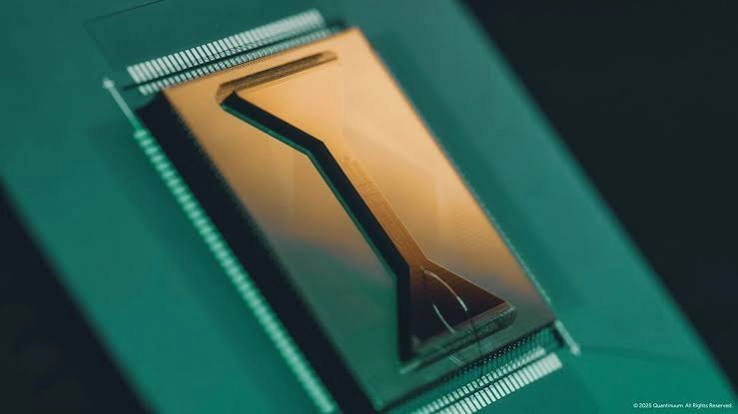
- Reimei Upgraded From 20 to 56 Qubits: RIKEN and US quantum-computing company Quantinuum have upgraded Reimei—a room-sized quantum computer at a research facility on the outskirts of Tokyo—from 20 qubits (System Model H1) to 56 qubits (System Model H2), marked at a ceremony attended by representatives from Japan’s Cabinet Office, the US Embassy, SoftBank Corp, and Nvidia Corp.
- Quantum-AI Synergy and Commercial Tipping Point: Quantinuum chief executive officer Rajeeb “Raj” Hazra stated that artificial intelligence and quantum computing complement each other and argued that quantum computing’s tipping point is happening now rather than five years away, while McKinsey & Co estimates quantum technology’s value at between $1.3 trillion and $2.7 trillion by 2035 across energy, transportation, financial services, pharmaceuticals, and material science.
- Supercomputer Links and Data Centre Exploration: Reimei is connected with RIKEN’s classical Fugaku supercomputer (alongside GPU computing resources such as ROQUO), while a SoftBank representative said the company is exploring how quantum computers might eventually integrate with data centres.
- Japan’s Patent Standing and Security Risks: According to McKinsey’s annual Quantum Technology Monitor, Japan ranks second in quantum-computing patents granted between 2000 and 2024 behind the United States and trails only China in announced investments (figures that include next-generation chip design), while Prime Minister Sanae Takaichi included quantum in her 17-field growth strategy, SMBC Nikko analysts called it “crucial to national security”, and Shor’s algorithm poses encryption and cybersecurity risks.
- International Partnerships, Academia, and Start-Ups: Columnist Catherine Thorbecke notes that Japan can draw on international partnerships—such as Quantinuum and IBM in Kobe via RIKEN—while strengthening university-business ties (an innovation barrier highlighted by the OECD) and encouraging start-up founders to pursue global commercial impact.
Japan (Japan Daily News) November 24, 2026 – Japan’s Reimei quantum computer—developed through a collaboration between RIKEN and US firm Quantinuum at a research facility on the outskirts of Tokyo—has been upgraded from 20 to 56 qubits, with representatives from Japan’s Cabinet Office, the US Embassy, SoftBank Corp, and Nvidia Corp attending a ceremony marking the expansion. Quantinuum CEO Rajeeb “Raj” Hazra said quantum computing and artificial intelligence complement each other and argued the tipping point is now, while McKinsey & Co projects $1.3 trillion to $2.7 trillion in value by 2035 and analysts highlight both security opportunities and encryption risks.
- How Do Rajeeb Hazra, Aaron D. Snipe, and SoftBank View Quantum Computing’s Commercialisation?
- How Does Japan Rank in Quantum Patents and Investment, and What Security Risks Arise?
- How Do Key Figures, Institutions, and Risks in Japan’s Quantum Push Compare?
- Background of the Particular Development After the News
- How This Development Can Affect Researchers, Enterprises, and Policymakers
As reported by Catherine Thorbecke of Bloomberg Opinion (with additional coverage from Quantinuum and Quantum Zeitgeist), RIKEN and US-based quantum-computing company Quantinuum upgraded Reimei—named using the Japanese characters for dawn at a research facility on the outskirts of Tokyo—from 20 qubits to 56 qubits at a ceremony attended by representatives from Japan’s Cabinet Office, the US Embassy, SoftBank Corp, and Nvidia Corp.
Unlike classical computers that process information in bits represented as 0s or 1s, quantum computers use qubits that can exist in a superposition of both states simultaneously, theoretically enabling certain problems to be solved exponentially faster. As reported by Catherine Thorbecke of Bloomberg Opinion, US Deputy Chief of Mission Aaron D. Snipe stated at the event, paraphrasing US physicist Richard Feynman: “If you think you can understand quantum mechanics, you don’t understand quantum mechanics.”
How Do Rajeeb Hazra, Aaron D. Snipe, and SoftBank View Quantum Computing’s Commercialisation?
Reporting by Catherine Thorbecke of Bloomberg Opinion—alongside technical disclosures from Quantinuum—captures perspectives from industry leaders, diplomats, and technology groups on moving quantum hardware from laboratory settings into broader economic and infrastructure use:
- Complementarity Between Quantum Computing and Artificial Intelligence: As reported by Catherine Thorbecke of Bloomberg Opinion, Quantinuum chief executive officer Rajeeb “Raj” Hazra stated: “AI helps build better quantum computers, quantum computers then help AI become more intelligent.” Hazra noted that advanced algorithms can assist in correcting error rates—one of the biggest challenges for fragile qubits—while quantum computers can help AI with chemistry and physical systems that lack language-based training data.
- Tipping Point, Cloud Analogy, and Misconceptions: Addressing industry forecasts that have long treated practical utility as five years away, Quantinuum chief executive officer Rajeeb “Raj” Hazra pushed back and said: “It’s not five years away. It is now.” He also said quantum computing could be more akin to the cloud—digital infrastructure that transformed the internet without consumers initially noticing—rather than a consumer-facing “ChatGPT moment”, adding that a misconception is viewing it merely as doing tasks faster rather than imagining things classical machines could never do, while McKinsey & Co estimates quantum technology’s value at between $1.3 trillion and $2.7 trillion by 2035 across energy, transportation, financial services, pharmaceuticals, and material science.
- Supercomputer Integration and Data Centre Exploration: As reported by Catherine Thorbecke of Bloomberg Opinion, RIKEN has connected Reimei to its classical Fugaku supercomputer, while a SoftBank representative said they are exploring how quantum computers might eventually integrate with data centres. Technical reporting from Quantinuum and Quantum Zeitgeist further notes that Reimei’s upgrade from 20 qubits (System Model H1) to 56 qubits (System Model H2) operates alongside Fugaku and RIKEN’s GPU supercomputer ROQUO under hybrid workflows supported by NEDO and METI.
How Does Japan Rank in Quantum Patents and Investment, and What Security Risks Arise?
Reporting by Catherine Thorbecke of Bloomberg Opinion situates Japan’s research strength, investment figures, strategic policy, and cybersecurity risks within global competition:
- Patents, Investment Rankings, and Past Commercialisation Lessons: According to McKinsey’s annual Quantum Technology Monitor, Japan ranks second in quantum-computing patents granted between 2000 and 2024 behind only the United States, and its tally of announced investments puts it behind only China, though analysts acknowledge those figures include next-generation chip design as well. Catherine Thorbecke of Bloomberg Opinion observes that Japan has a long history of producing world-leading research—from batteries to memory chips—only to watch others build dominant businesses, while noting that China is largely going it alone amid a widening tech cold war whereas Japan can tap into international expertise through partnerships such as Quantinuum and IBM (which installed one of its first quantum computers outside the US in Kobe via a collaboration with RIKEN).
- Growth Strategy, National Security, and Shor’s Algorithm: Japanese Prime Minister Sanae Takaichi included quantum in her centerpiece 17-field growth strategy, while SMBC Nikko analysts stated that it is “crucial to national security”. At the same time, one of the biggest risks stems from Shor’s algorithm, a quantum method that could allow a machine to break much of the encryption used by banks and governments, spawning severe cyberattacks.
- Universities, Start-Ups, and Commercialisation: Catherine Thorbecke of Bloomberg Opinion notes that Japan is wise to expand relationships with domestic companies to help tackle commercialisation, work with colleges, and inspire start-up founders to think bigger with global impact beyond its borders, pointing out that the Organisation for Economic Co-operation and Development (OECD) has pointed to weak links between universities and businesses as an innovation barrier.
How Do Key Figures, Institutions, and Risks in Japan’s Quantum Push Compare?
A structured summary outlines the core organisations, figures, and metrics noted across the reporting:
| Category / Entity | Reported Role or Metric | Key Context Highlighted |
| Reimei (RIKEN & Quantinuum) | Upgraded from 20 to 56 qubits at a facility outside Tokyo | Connected with RIKEN’s classical Fugaku supercomputer; ceremony attended by Cabinet Office, US Embassy, SoftBank, and Nvidia representatives. |
| Rajeeb “Raj” Hazra (Quantinuum CEO) | Stated AI and quantum complement each other; said tipping point is “now” | Compared potential rollout to the cloud; noted applications in energy, transport, finance, pharmaceuticals, and material science. |
| McKinsey & Co & Policy Benchmarks | $1.3tn–$2.7tn estimated quantum value by 2035; #2 in 2000–2024 patents; #2 in announced investment behind China | Included in Prime Minister Sanae Takaichi’s 17-field growth strategy; IBM also partnered with RIKEN in Kobe. |
| Security & Innovation Factors | SMBC Nikko called it “crucial to national security”; Shor’s algorithm encryption risk; OECD noted weak university–business links | SoftBank exploring data centre integration; start-ups and universities cited as key to global commercialisation. |
Background of the Particular Development After the News
Quantum computing uses quantum-mechanical phenomena—including superposition—via qubits rather than classical binary bits to tackle specific computational problems that challenge conventional processors. In Japan, RIKEN serves as the country’s largest national research laboratory and operates flagship supercomputing systems such as Fugaku, while engaging with international partners including US-based Quantinuum and IBM (which placed an early non-US quantum computer in Kobe through a collaboration with RIKEN).
While artificial intelligence has drawn intense commercial and public attention, quantum hardware has progressed through incremental qubit and architecture milestones as governments and companies weigh its scientific potential, industrial relevance, and cybersecurity implications.
How This Development Can Affect Researchers, Enterprises, and Policymakers
Expanding Reimei to 56 qubits alongside quantum-AI integration and policy backing carries practical implications for several audiences:
1. Quantum Researchers, Universities, and Start-Up Founders
For scientists, universities, and start-ups in Japan and partner countries, closer coordination between quantum processors, supercomputers such as Fugaku, and research institutions creates opportunities for algorithmic and scientific experimentation, while strengthening university-business links remains central to turning research into scalable ventures.
2. Technology Firms, Data Centre Operators, and Industrial Enterprises
For companies such as Quantinuum, SoftBank, Nvidia, and businesses across energy, transportation, financial services, pharmaceuticals, and material science, exploring data centre integration, error-correction methods, and domain-specific applications will shape how early commercial value emerges ahead of broader market adoption.
3. Governments, National Security Officials, and Cybersecurity Teams
For Japanese policymakers under Prime Minister Sanae Takaichi, partner governments such as the United States, and institutions relying on cryptography—including banks and public agencies—advances in quantum computing reinforce both strategic technology competition and the urgency of preparing defences against cryptographic threats such as Shor’s algorithm.