

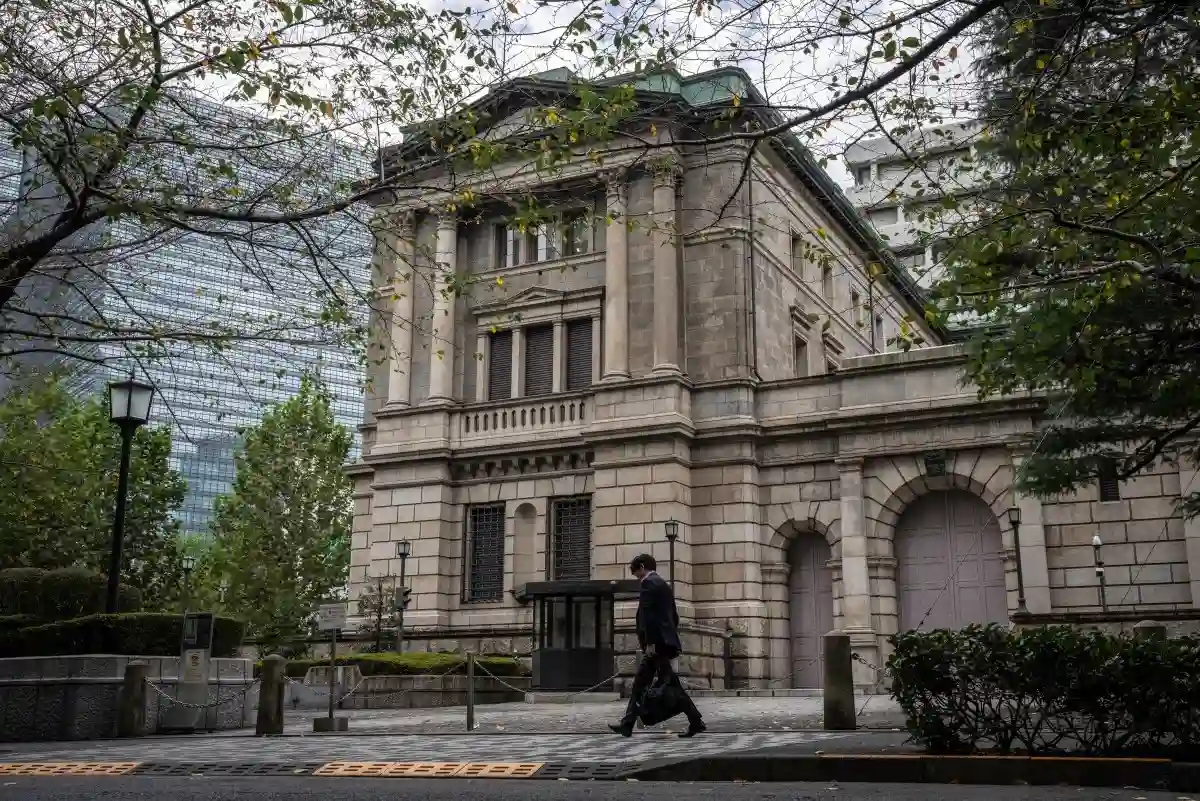
- Global Safeguards Urged by Bank of Japan Executive Director: Bank of Japan Executive Director Kazushige Kamiyama warned on Friday, 27 November 2026 in Tokyo that global policymakers must strengthen defences against financial stability and cybersecurity risks arising from new forms of digital money and programmable financial infrastructure.
- Co-existence of Stablecoins, Tokenised Deposits and Central Bank Money: Addressing an International Monetary Fund (IMF) seminar on digital money and payments, Kazushige Kamiyama stated that stablecoins and tokenised deposits are likely to co-exist and interact, requiring sound reserve backing, clear redemption rules and strong links to central bank money—which remains the fundamental anchor of trust—to prevent market fragmentation.
- AI-Driven Cybersecurity Threats Across Interconnected Platforms: Kazushige Kamiyama highlighted that the expanding use of artificial intelligence enables attackers to discover and exploit vulnerabilities more rapidly, warning that interconnected digital platforms could allow cyber incidents to spread quickly unless security and resilience are built in from the outset.
- Market Stress Amplification and Legal Clarity for Tokenisation: Explaining that tokenisation converts assets such as bonds, deposits and securities into digital tokens on programmable platforms, Kazushige Kamiyama cautioned that new cross-institution trading channels could amplify market movements during periods of stress and called for clear legal frameworks establishing whether transferring a token transfers legal rights and obligations in the underlying asset.
Japan (Japan Daily News) November 27, 2026 – Bank of Japan Executive Director Kazushige Kamiyama called on global policymakers in Tokyo on Friday, 27 November 2026 to strengthen safeguards against financial stability and cybersecurity risks linked to stablecoins, tokenised deposits and artificial intelligence. Reported across Reuters, AsiaOne, The Paypers, The Block and John Chen of Crypto Briefing following his keynote speech at an International Monetary Fund seminar, his remarks emphasised central bank money as the monetary system’s anchor of trust.
- What Risks Do Stablecoins and Tokenised Deposits Pose to Financial Stability?
- Why Does Artificial Intelligence Increase Cybersecurity Risks for Digital Financial Infrastructure?
- What Legal and Institutional Frameworks Are Needed for Tokenisation?
- How Do the Key Risks and Safeguards Outlined by Kazushige Kamiyama Compare?
- Background of the Particular Development After the News
Global policymakers must strengthen defences against financial stability and cybersecurity risks posed by the emergence of new forms of digital money and financial infrastructure, Bank of Japan Executive Director Kazushige Kamiyama said on Friday, 27 November 2026.
Speaking at the International Monetary Fund’s seminar Digital Money and Payments: Transitioning Toward a New Paradigm at the Imperial Hotel Tokyo on Friday, 27 November 2026—as reported across Reuters, AsiaOne and The Paypers—Kazushige Kamiyama stated: “My central message is that technological innovation offers significant opportunities to improve money and payments, but innovation must go hand in hand with trust.”
What Risks Do Stablecoins and Tokenised Deposits Pose to Financial Stability?
Reporting by Reuters, AsiaOne (27 November 2026), The Block (27 November 2026) and John Chen of Crypto Briefing (27 November 2026) details Kazushige Kamiyama’s assessment of how emerging digital payment instruments interact with the traditional monetary system:
- Co-existence Without Unnecessary Fragmentation: Kazushige Kamiyama noted that new forms of digital money, such as stablecoins and tokenised deposits, are likely to co-exist and interact, creating fresh challenges for policymakers to ensure that such diversity does not cause unnecessary fragmentation or undermine financial stability.
- Central Bank Money as the Anchor of Trust: Underscoring the foundational role of sovereign settlement assets, Kazushige Kamiyama stated, as reported by Reuters and AsiaOne on 27 November 2026: “Central bank money will continue to play a fundamental role as the anchor of trust in the monetary system.”
- Reserve Backing, Redemption Rules and Liquidity Timing: As reported by The Block and BigGo Finance on 27 November 2026, Kazushige Kamiyama emphasised that stablecoins require strict oversight of their backing assets and operational structures alongside explicit redemption terms to preserve the Bank for International Settlements’ “singleness of money” principle—under which central bank reserves, commercial bank deposits and privately issued tokens trade at par. Warning of liquidity mismatches when round-the-clock token trading meets conventional banking hours, Kazushige Kamiyama stated: “Faster settlement does not automatically mean more efficient liquidity management.”
Why Does Artificial Intelligence Increase Cybersecurity Risks for Digital Financial Infrastructure?
Coverage by Reuters, AsiaOne (27 November 2026) and John Chen of Crypto Briefing (26–27 November 2026) outlines the Bank of Japan’s warnings regarding artificial intelligence and interconnected payment networks:
- AI-Enabled Vulnerability Discovery and Exploitation: Kazushige Kamiyama warned that the growing use of artificial intelligence introduces fresh cybersecurity risks, requiring regulatory authorities and financial institutions to reinforce their defences against the increasing ability of AI tools to discover and exploit system vulnerabilities.
- Contagion Across Interconnected Platforms: Because tokenised and digital payment networks link institutions and markets closely together, Kazushige Kamiyama noted that interconnected platforms may allow cyber incidents to spread rapidly, meaning new financial infrastructure must be designed with security and operational resilience from the outset.
What Legal and Institutional Frameworks Are Needed for Tokenisation?
Reporting by Reuters and AsiaOne on 27 November 2026 records Kazushige Kamiyama’s analysis of asset tokenisation—defined as the process of converting assets such as bonds, deposits and securities into digital tokens that can be traded and settled on programmable platforms:
- Moving From Experiments to Regulated Infrastructure: Policymakers globally are increasingly moving beyond pilot experiments toward establishing rules and infrastructure for wider adoption, while seeking to ensure tokenised finance remains firmly within the realm of regulated money and the traditional financial system.
- Amplification of Market Movements During Stress: Kazushige Kamiyama cited market volatility as an area warranting close vigilance, warning that by creating new channels of trading across institutions and markets, tokenisation may amplify market movements during periods of financial stress.
- Legal Certainty Over Underlying Asset Rights: Beyond technological engineering, Kazushige Kamiyama emphasised that policymakers must establish clear legal frameworks to clarify whether the transfer of a digital token effectively transfers legal rights and obligations in the underlying asset. Summarising the conditions required for safe adoption, Kazushige Kamiyama stated, as reported by Reuters and AsiaOne: “Taken together, these challenges show that the benefits of tokenisation depend not on technology alone, but also on sound institutional arrangements, clear legal frameworks, and public-private cooperation.”
How Do the Key Risks and Safeguards Outlined by Kazushige Kamiyama Compare?
A structured summary compiles the policy areas, specific risks and recommended safeguards presented at the 27 November 2026 IMF seminar in Tokyo:
| Policy Domain | Identified Risk | Recommended Safeguard / Statement | Source / Attribution |
| Digital Money & Stablecoins | Co-existence of stablecoins and tokenised deposits causing fragmentation or liquidity mismatches | Keep central bank money as “the anchor of trust”; enforce strict backing-asset oversight, redemption rules and links to central bank reserves | Kazushige Kamiyama at IMF Seminar; Reuters; The Block; BigGo Finance |
| Artificial Intelligence & Cybersecurity | Growing capability of AI to discover and exploit flaws, with cyber incidents spreading rapidly across linked platforms | Strengthen institutional and regulatory cyber defences and build security and resilience into new platforms from the outset | Kazushige Kamiyama at IMF Seminar; Reuters; AsiaOne; Crypto Briefing |
| Asset Tokenisation & Law | New cross-market trading channels amplifying stress movements; legal ambiguity over asset ownership upon token transfer | Establish clear legal frameworks confirming transfer of rights and obligations in underlying assets, supported by public-private cooperation | Kazushige Kamiyama at IMF Seminar; Reuters; AsiaOne |
Background of the Particular Development After the News
The Bank of Japan has expanded its technical and regulatory work on programmable finance throughout 2026, launching a wholesale distributed ledger technology (DLT) sandbox examining central bank money settlement for domestic interbank transfers, cross-border payments and tokenised Japanese government bonds, alongside participating in the Bank for International Settlements-led Project Agorá.
Domestically, Japan’s Financial Services Agency and the Bank of Japan issued a joint request to financial institutions on 22 May 2026 urging management-level action against AI-enabled cyber threats, while Japan’s three largest banking groups prepare for a March 2027 commercial rollout of yen-denominated stablecoin initiatives.
1. Stablecoin Issuers and Commercial Banks
For banks and licensed issuers preparing yen-denominated stablecoins or tokenised deposit platforms ahead of 2027 commercial launches, regulatory expectations will centre on full reserve backing, guaranteed par redemption and technical interoperability with central bank settlement rails.
2. Financial Infrastructure Operators and Cybersecurity Teams
For clearing houses, securities depositories and commercial lenders deploying distributed ledger systems, integrating AI-resilient threat detection and cross-platform circuit breakers during initial system design becomes a prerequisite for regulatory approval.
3. Global Monetary Authorities and Legal Policymakers
For central banks and financial ministries participating in International Monetary Fund and Bank for International Settlements coordination forums, harmonising commercial law on tokenised asset transfers and stress-testing cross-border liquidity channels will shape how rapidly tokenised bonds and securities scale.