
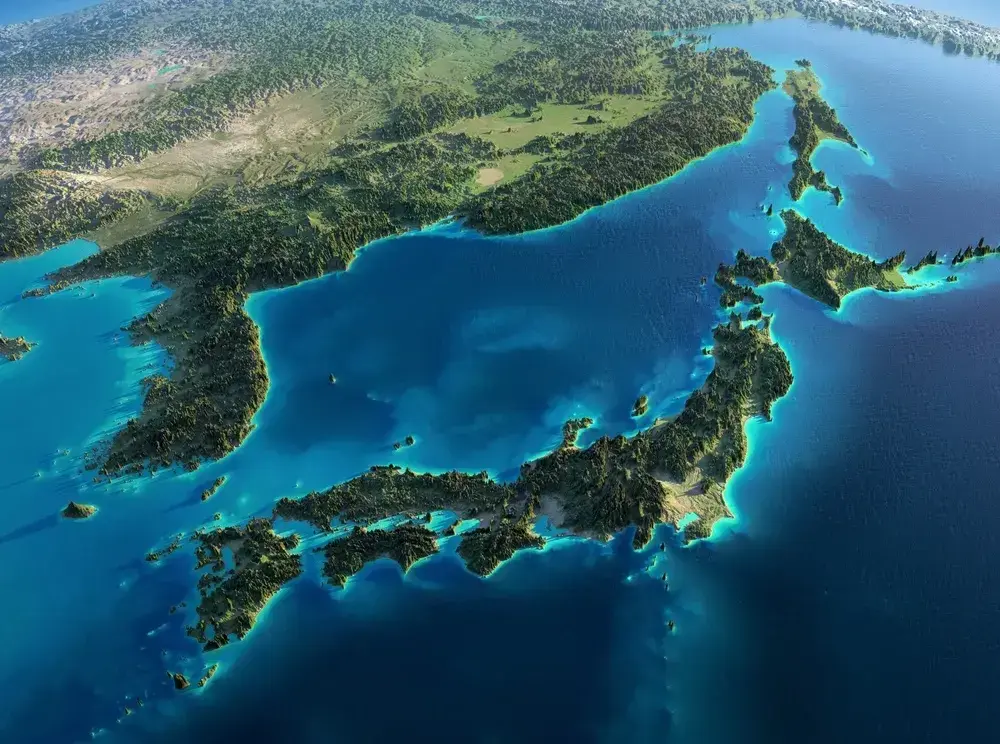
- Twin North Pacific Disputes: Japan faces protracted maritime territorial disputes with South Korea over the Dokdo (Takeshima) Islands in the Sea of Japan (East Sea) and with Russia over the Kuril Islands (Northern Territories / Southern Chishima) between the Sea of Okhotsk and the North Pacific Ocean, rooted in historical claims, geopolitical interests, economic resources and post-Second World War settlement ambiguities.
- Dokdo / Takeshima Control and Legal Standoff: Covering roughly 187,000 square metres across two main islets (Seodo and Dongdo) and 89 surrounding islets, Dokdo is controlled by South Korea—which rejects the existence of a dispute—while Japan incorporated it under Shimane Prefecture in 1905 and seeks international adjudication.
- Kuril Islands / Northern Territories Deadlock: Spanning 1,200 kilometres across 56 islands and 15,600 square kilometres, the Kuril chain—particularly the four southern islands of Iturup (Etorofu), Kunashir (Kunashiri), Shikotan and Habomai—remains under Russian administration, with constitutional amendments and naval security concerns barring transfers to Japan.
- Geopolitical, Maritime and Resource Stakes: Both island groups carry strategic value for maritime surveillance, naval access and Arctic or regional sea lanes alongside fishing grounds, mineral wealth and potential gas hydrate deposits.
Japan (Japan Daily News) November 26, 2026 – Japan’s long-standing territorial disputes with South Korea over the Dokdo (Takeshima) Islands and with Russia over the Kuril Islands (Northern Territories) remain unresolved due to competing historical interpretations, post-war treaty ambiguities and strategic interests. As documented in the regional territorial analysis and cited sources—including Shin (1997), Ji (2010), Ch’oe (2015), Emmers (2010), Schrijver and Prislan (2015), Bukh (2015), Zhang (2015), Xue (2005), Bong (2013), YNA (2020), Ismail (2017), Jeong (2018), Wiegand and Choi (2017), Hwang, Cho and Wiegand (2018), Fearon (1994), Pereslavtsev (2018), Park and Chubb (2011), MOFA of the ROK (2012), Kaczynski (2007), Elleman, Nichols and Ouimet (1999), MOFA of Japan (1993, 2001, 2011), Zakharova (2020), MOFA of the Russian Federation (2020), Hasegawa (1998), Martin (1967), Keene (2002), Treaty of Peace with Japan (1952), Schoenbaum (2008), Clark (2005), TASS (2019, 2020), Chang (1998), Tarlow (2000), Hamzah, Esmael and Abbas (2020), Yilmaz (2017), Chun (2020) and AP News (2020)—both conflicts reflect enduring legacies of colonialism and Cold War geopolitics.
- How Did the Dokdo / Takeshima Dispute Develop From Early Records to Post-War Treaties?
- How Did the Kuril Islands / Northern Territories Conflict Evolve From 1786 to Modern Russia?
- How Do Japan’s Disputes Over the Dokdo and Kuril Islands Compare?
- Background of the Particular Development After the News
- Prediction: How This Development Can Affect Regional Governments, Maritime Operators and Analysts
As documented in the regional territorial analysis (citing Shin 1997, Ji 2010, Ch’oe 2015, Emmers 2010, Schrijver and Prislan 2015, Bukh 2015, Zhang 2015, Xue 2005, Bong 2013, YNA 2020, Ismail 2017, Jeong 2018, Wiegand and Choi 2017, Hwang, Cho and Wiegand 2018, Fearon 1994, Pereslavtsev 2018, Park and Chubb 2011, MOFA of the ROK 2012, Kaczynski 2007, Elleman, Nichols and Ouimet 1999, MOFA of Japan 1993, 2001, 2011, Zakharova 2020, MOFA of the Russian Federation 2020, Hasegawa 1998, Martin 1967, Keene 2002, Treaty of Peace with Japan 1952, Schoenbaum 2008, Clark 2005, TASS 2019, 2020, Chang 1998, Tarlow 2000, Hamzah, Esmael and Abbas 2020, Yilmaz 2017, Chun 2020 and AP News 2020), Japan’s twin maritime territorial disputes with South Korea over the Dokdo (Takeshima) Islands and with Russia over the Kuril Islands (Northern Territories) remain deadlocked over competing legal, historical and strategic claims.
Whereas maritime disputes in the South China Sea have drawn extensive scholarly attention, the North Pacific Ocean conflicts share four common features—claims of historical title, geopolitical rationale, economic resources and legacies of colonialism and post-Second World War settlements—while differing because Japan is the disputing party in both Northeast Asian conflicts.
How Did the Dokdo / Takeshima Dispute Develop From Early Records to Post-War Treaties?
Reporting and historical scholarship cited in the territorial analysis—including Shin (1997), Ji (2010), Ch’oe (2015), Emmers (2010), Schrijver and Prislan (2015), Bukh (2015), Zhang (2015), Xue (2005), Bong (2013), YNA (2020), Ismail (2017) and Jeong (2018)—trace the Dokdo (Takeshima) dispute across geography, colonial rule and post-war agreements:
- Geography, Korean Records and Japanese Claims: The Dokdo Islands (Takeshima in Japanese) sit in the Sea of Japan (East Sea), comprising two main islands—Seodo (West Islet) and Dongdo (East Islet), with structures including a docking facility, heliport and living facilities—and 89 surrounding islets totalling approximately 187,000 square metres. Dokdo lies over 87 kilometres southeast of South Korea’s Ulleungdo and more than 157 kilometres from Japan’s Oki Island, and is patrolled by Coast Guard vessels alongside lighthouse staff, local officials and civilian residents. As noted by Shin (1997), Korean ownership claims trace to AD 512 and continued despite a “vacant island policy” from the early 15th to the late 19th centuries, whereas Japan argues early Korean references resemble Utsuryo Island and relies on records from the late 1700s—which Ji (2010) notes Korean researchers argue actually underscore proximity to the Korean mainland.
- Colonial Expansion, 1905 Incorporation and San Francisco Treaty Ambiguity: Following 17th-century fishing disputes, Meiji-era expansion, the First Sino-Japanese War (1894–1895), the Russo-Japanese War (1904–1905) and protectorate agreements in 1905 and 1907 leading to formal annexation of Korea in 1910, Japan incorporated Dokdo in 1905 as terra nullius under Shimane Prefecture—a designation Ch’oe (2015) notes Korean experts reject. As analysed by Emmers (2010) and Schrijver and Prislan (2015), the 1943 Cairo Declaration, 1945 Potsdam Declaration and 1951 Treaty of San Francisco left Dokdo’s status ambiguous amid Cold War concerns over the Korean conflict, leading South Korea’s President Syngman Rhee to proclaim maritime jurisdiction encompassing Dokdo in January 1952 (Bukh 2015). Subsequent 1965 normalisation, 1970s Exclusive Economic Zone (EEZ) claims (Zhang 2015), the 1996 UN Convention on the Law of the Sea (UNCLOS), the 1998 fisheries agreement (Xue 2005) and regional frameworks such as the Chiang Mai Initiative and ASEAN+3 did not prevent recurring tensions—including 2004 stamps, 2005 Takeshima Day and maritime surveillance (Bukh 2015; YNA 2020), textbook disputes, former President Lee Myung-bak’s 2012 visit (Ismail 2017), defence drills (Jeong 2018) and Japan’s National Museum of Territory and Sovereignty.
- Strategic Value and Divergent Legal Positions: As examined by Wiegand and Choi (2017), Hwang, Cho and Wiegand (2018), Fearon (1994) and Pereslavtsev (2018), domestic nationalism interacts with strategic surveillance value, traditional fishing grounds and potential gas hydrate deposits cited on K-Dokdo. As reported by Park and Chubb (2011) and MOFA of the ROK (2012), Japan has sought International Court of Justice adjudication while South Korea’s Ministry of Foreign Affairs stated in 2012 that Japan’s “proposal … is not even worthy of consideration” because “there is no territorial dispute over [Dokdo]”.
How Did the Kuril Islands / Northern Territories Conflict Evolve From 1786 to Modern Russia?
Sources cited in the territorial analysis—including Kaczynski (2007), Elleman, Nichols and Ouimet (1999), MOFA of Japan (1993, 2001, 2011), Zakharova (2020), MOFA of the Russian Federation (2020), Hasegawa (1998), Martin (1967), Keene (2002), Treaty of Peace with Japan (1952), Schoenbaum (2008), Clark (2005), TASS (2019, 2020), Chang (1998), Tarlow (2000), Hamzah, Esmael and Abbas (2020), Yilmaz (2017), Chun (2020) and AP News (2020)—detail the Kuril dispute:
- Treaties, Second World War and Cold War Deadlock: Stretching 1,200 kilometres across 56 islands and 15,600 square kilometres between Kamchatka and Hokkaido, the Kuril chain—centred on Iturup (Etorofu), Kunashir (Kunashiri), Shikotan and Habomai—is administered by Russia’s Sakhalin Oblast as South Kuril District and is home to over 10,000 residents and Russian forces (Kaczynski 2007; Elleman, Nichols and Ouimet 1999). Following Czarist incorporation in 1786, the 1855 Treaty of Shimoda, the 1875 Treaty of St. Petersburg (Hasegawa 1998) and the 1905 Portsmouth Peace Treaty (Martin 1967; Keene 2002), Soviet forces took Southern Sakhalin and four Kuril islands between 18 August and 1 September 1945 ahead of the 2 September 1945 Instrument of Surrender and 1946 incorporation (Elleman, Nichols and Ouimet 1999). Article 11(c) of the 1951 San Francisco Peace Treaty renounced Japan’s claim to the Kurils without naming a recipient state, and while 1956 diplomatic normalisation referenced returning Habomai and Shikotan after a peace treaty amid US objections and Okinawa conditions (Schoenbaum 2008; Clark 2005), TASS (2019) reported Russia’s view that the Soviet Union revoked transfer obligations after the 1960 US–Japan security treaty.
- Post-Cold War Shifts, Official Statements and Strategic Importance: Following the 1991 Japan–Soviet Joint Communiqué and 1993 Tokyo Declaration (MOFA of Japan 1993, 2001), Japan pursued economic cooperation and “money diplomacy” in the 1990s (Chang 1998; Tarlow 2000), but TASS (2020) noted Russia’s position hardened as stability returned. As stated by the Ministry of Foreign Affairs of Japan (2011), Japan views Russian control of the four islands as an “occupation” while pledging not to force relocation or deportation of current Russian residents. Conversely, as reported by Russian Foreign Ministry spokesperson Maria Zakharova (2020) and MOFA of the Russian Federation (2020), Russia states that sovereignty over the islands is non-negotiable under constitutional amendments barring territory transfer and will not be altered by a peace treaty. Economically and militarily, the islands sit near rich fishing grounds (Hamzah, Esmael and Abbas 2020), minerals (Chang 1998), gas and energy routes linked to the Arctic and China (Yilmaz 2017; Chun 2020) and naval passageways for Russia’s Pacific Fleet out of Vladivostok (AP News 2020).
How Do Japan’s Disputes Over the Dokdo and Kuril Islands Compare?
A structured summary contrasts the two territorial disputes analysed in the regional study:
| Dimension | Dokdo / Takeshima Islands | Kuril Islands / Northern Territories |
|---|---|---|
| Geography & Control | Two main islets (Seodo, Dongdo) and 89 islets (~187,000 sq m) in the Sea of Japan / East Sea; controlled by South Korea | 56 islands (15,600 sq km) spanning 1,200 km between Kamchatka and Hokkaido; South Kurils (Iturup, Kunashir, Shikotan, Habomai) administered by Russia |
| Core Legal & Historical Stance | South Korea rejects any dispute and cites early records; Japan claims 1905 incorporation and seeks ICJ arbitration | Japan terms control an “occupation” and cites 1855/1875 treaties and 1956 declaration; Russia cites post-WW2 settlement, 1960 treaty context and constitutional bar |
| Strategic & Economic Drivers | Maritime monitoring, fishing waters and potential gas hydrate deposits | Pacific Fleet naval access, Arctic/Northeast Passage trade and energy links, fisheries and minerals |
Background of the Particular Development After the News
Maritime territorial disputes across East and Northeast Asia—spanning the South China Sea, the East China Sea and the North Pacific Ocean—are shaped by overlapping historical narratives, contested post-Second World War border settlements and modern maritime law under UNCLOS.
In the North Pacific, Japan’s sovereignty claims over Dokdo (Takeshima) and the Southern Kurils (Northern Territories) intersect with alliance commitments involving the United States, South Korea’s domestic legal and political consensus on Dokdo administration, and Russia’s hardened territorial stance following constitutional amendments and heightened East Asian security competition.
Prediction: How This Development Can Affect Regional Governments, Maritime Operators and Analysts
Continued deadlock over the Dokdo and Kuril Islands carries practical implications across several groups:
1. Governments and Diplomats in Tokyo, Seoul and Moscow
For policymakers in Japan, South Korea and Russia, entrenched legal positions, constitutional constraints in Moscow and domestic political sensitivities in Seoul and Tokyo make a comprehensive settlement unlikely in the near term, keeping diplomatic management focused on crisis prevention and bilateral communication.
2. Fishing Vessels, Commercial Shipping and Energy Stakeholders
For commercial mariners, fishing operators and energy or maritime planners operating around the Sea of Japan, Sea of Okhotsk and North Pacific approaches, overlapping EEZ claims, naval patrols and contested sea lanes require ongoing attention to jurisdictional rules and navigational safety.
3. Security Analysts and Regional Observers
For strategic analysts and observers tracking Northeast Asian security, the twin disputes remain key indicators of how historical grievances, US alliance dynamics, Russia–China Arctic and naval coordination, and maritime resource competition interact in the North Pacific.