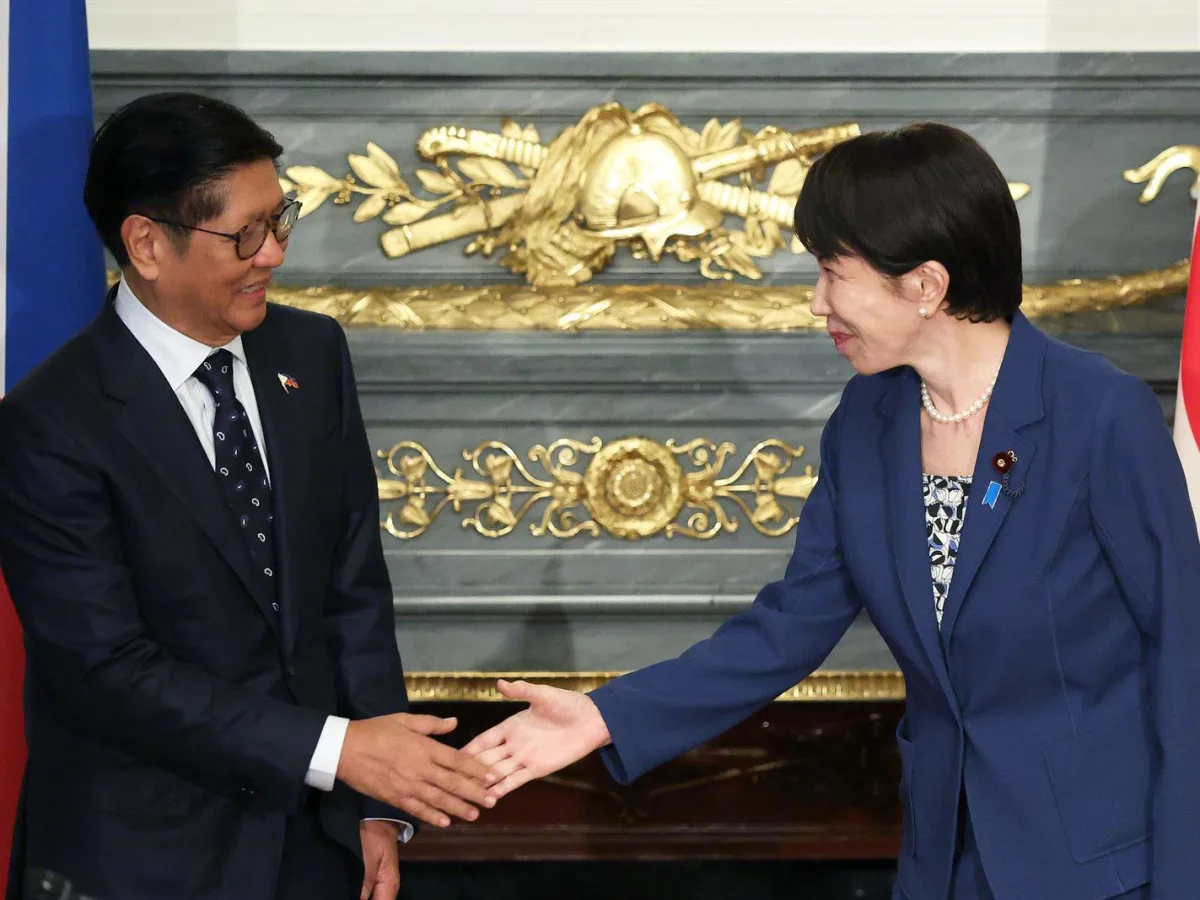
- Japanese Prime Minister Sanae Takaichi met Philippine President Ferdinand Marcos Jr. in Manila on Monday, November 16, 2026, ahead of the Association of Southeast Asian Nations (ASEAN) summit, praising “constant advances” in bilateral relations and reaffirming their joint commitment to a “free and open” Indo-Pacific.
- Both leaders agreed on the importance of close cooperation to strengthen regional autonomy and resilience under the updated Free and Open Indo-Pacific (FOIP) framework, alongside deeper collaboration within ASEAN on economic and energy resilience and the Asia Zero Emission Community (AZEC).
- Security discussions covered tensions in the South China Sea, North Korea’s missile tests, and trilateral strategic and operational coordination among Japan, the United States, and the Philippines, which have expanded joint military exercises in recent months.
- Tokyo and Manila remain engaged in bilateral negotiations to establish a new maritime delimitation defining their respective 200-nautical-mile exclusive economic zones amid intensified Chinese territorial claims in the region.
Japan (Japan Daily News) November 16, 2026 – Japanese Prime Minister Sanae Takaichi and Philippine President Ferdinand Marcos Jr. met in Manila on Monday, November 16, 2026, to celebrate steady progress in bilateral relations and reinforce their shared strategy for a “free and open” Indo-Pacific ahead of Tuesday’s ASEAN summit. During their talks, the two leaders prioritised strengthening regional economic and energy resilience—including advancing the Asia Zero Emission Community framework—while reviewing pressing regional security challenges in the South China Sea and on the Korean Peninsula. Tokyo and Manila also reaffirmed ongoing maritime delimitation talks and expanding trilateral military coordination with the United States.
- What Key Topics Did Sanae Takaichi and Ferdinand Marcos Jr. Discuss in Manila?
- How Are Japan and the Philippines Advancing Cooperation Across Security, Maritime, and Energy Domains?
- Background of the Particular Development After the News
- How This Development Can Affect Regional Security, ASEAN Energy Supply Chains, and Maritime Governance
As reported by international wire services covering the diplomatic meetings in the Philippine capital, Japanese Prime Minister Sanae Takaichi highlighted on Monday, November 16, 2026, during her bilateral meeting with Philippine President Ferdinand Marcos Jr., the “constant advances” achieved in relations between Japan and the Philippines, while underscoring their shared determination to advance the strategy for a “free and open” Indo-Pacific.
In an official readout issued by the Japanese government regarding the discussions—which took place ahead of Tuesday’s Association of Southeast Asian Nations (ASEAN) summit in Manila—Tokyo stated: “They celebrated the constant advances in bilateral relations across a wide variety of areas. They also agreed on the importance of cooperating closely to strengthen regional autonomy and resilience within the framework of the updated version of the Free and Open Indo-Pacific initiative.”
As further detailed by Jiji Press (published via Nippon.com) and Manila Standard, Sanae Takaichi and Ferdinand Marcos Jr. centred their economic talks on deepening joint action within ASEAN, placing particular emphasis on energy cooperation and bolstering the region’s economic and energy resilience. According to Jiji Press, Sanae Takaichi expressed her intention to step up efforts to fortify economic and energy resilience and advance the Asia Zero Emission Community (AZEC)—a regional decarbonisation framework co-chaired by Japan and the Philippines—while Ferdinand Marcos Jr. voiced his support for the initiative alongside discussions on revising the bilateral economic partnership agreement.
Alongside economic and energy initiatives, Sanae Takaichi and Ferdinand Marcos Jr. examined major regional security developments. Their discussions encompassed the ongoing security situation in the South China Sea, developments surrounding North Korea and its ballistic missile tests, and trilateral security cooperation linking Japan, the United States, and the Philippines.
Tokyo and Manila continue to conduct bilateral negotiations aimed at establishing a new maritime delimitation against the backdrop of intensified territorial claims by Beijing. Although Japan and the Philippines do not share a direct land border, both nations—as coastal states under international maritime law—hold the right to define an exclusive economic zone (EEZ) extending up to 200 nautical miles.
Within the same strategic context, the Philippines, Japan, and the United States have expanded their joint military drills over recent months, seeking to consolidate strategic and operational coordination in response to China’s growing presence across the regional security environment.
What Key Topics Did Sanae Takaichi and Ferdinand Marcos Jr. Discuss in Manila?
Official government statements and reporting by Jiji Press and Manila Standard identify the core pillars of the November 16, 2026, bilateral summit:
- Updated Free and Open Indo-Pacific (FOIP) Strategy: Reaffirming close bilateral alignment to strengthen regional autonomy and resilience under Japan’s updated FOIP framework.
- ASEAN Economic and Energy Resilience: Expanding joint cooperation within ASEAN to safeguard supply chains and energy security, including advancing the Asia Zero Emission Community (AZEC) and reviewing the Japan–Philippines Economic Partnership Agreement.
- Regional Security Challenges: Addressing maritime tensions in the South China Sea and monitoring North Korea’s ongoing missile testing programme.
- Trilateral Defence Coordination: Consolidating operational readiness among Japan, the United States, and the Philippines following expanded joint military exercises in recent months.
- Bilateral Maritime Delimitation: Continuing technical and diplomatic negotiations to define overlapping exclusive economic zone (EEZ) boundaries up to 200 nautical miles.
How Are Japan and the Philippines Advancing Cooperation Across Security, Maritime, and Energy Domains?
A structured overview illustrates the multi-dimensional scope of bilateral and multilateral coordination highlighted during the Manila talks:
| Cooperation Pillar | Institutional Framework | Core Objective |
| Strategic & Diplomatic Alignment | Japan–Philippines Comprehensive Strategic Partnership & Updated FOIP | Reinforce regional autonomy, rule of law, and resilience across the Indo-Pacific ahead of ASEAN summit meetings. |
| Security & Defence Coordination | Japan–US–Philippines Trilateral Framework | Expand joint military drills and deepen operational interoperability in response to South China Sea tensions and North Korean missile tests. |
| Maritime Boundary Negotiations | Bilateral Maritime Delimitation Talks | Establish a formal boundary governing overlapping 200-nautical-mile exclusive economic zones between the two coastal states. |
| Energy & Economic Resilience | ASEAN & Asia Zero Emission Community (AZEC) | Strengthen regional energy security, decarbonisation efforts, and bilateral trade frameworks. |
Background of the Particular Development After the News
Relations between Japan and the Philippines have undergone steady institutional deepening over recent years, culminating in the elevation of bilateral ties to a Comprehensive Strategic Partnership during President Ferdinand Marcos Jr.’s state visit to Tokyo in May 2026. Following Prime Minister Sanae Takaichi’s inauguration and her government’s subsequent update of Japan’s Free and Open Indo-Pacific (FOIP) framework, Tokyo has placed heightened emphasis on practical infrastructure, energy security, and defence capacity-building across Southeast Asia.
Operating under the Philippines’ 2026 ASEAN chairmanship, Manila and Tokyo have paired bilateral defence mechanisms—including reciprocal troop access arrangements and joint maritime patrols with the United States—with economic initiatives such as the Luzon Economic Corridor and the fourth Asia Zero Emission Community Leaders’ Meeting. Simultaneously, ongoing bilateral talks over maritime delimitation aim to clarify jurisdictional boundaries in the waters north of Luzon and south of Okinawa in accordance with the United Nations Convention on the Law of the Sea (UNCLOS).
How This Development Can Affect Regional Security, ASEAN Energy Supply Chains, and Maritime Governance
The outcomes of the Manila bilateral meeting between Sanae Takaichi and Ferdinand Marcos Jr. are projected to influence regional dynamics across three primary areas:
1. Deeper Trilateral Deterrence and Operational Interoperability in the Western Pacific
For defence forces in Japan, the Philippines, and the United States, sustained diplomatic backing at the leadership level ensures continued expansion of joint naval and air exercises, strengthening deterrence and maritime domain awareness around the South China Sea and the First Island Chain.
2. Accelerated Clean Energy and Supply-Chain Investment Across ASEAN
For energy utilities, infrastructure developers, and trade ministries across Southeast Asia, joint Japanese–Philippine leadership within ASEAN and the Asia Zero Emission Community will channel financing and technical assistance toward grid resilience and decarbonisation projects.
3. Precedent-Setting Maritime Delimitation in Northeast and Southeast Asia
For maritime legal experts and coastal fisheries operating between southern Japan and the northern Philippines, steady progress in bilateral exclusive economic zone negotiations provides a rules-based diplomatic model for resolving overlapping 200-nautical-mile maritime claims peacefully.