Key Points
- Japanese commercial enterprises intend to convert high-level political trust between Viet Nam and Japan into active industrial cooperation focusing on green transition, human resources development, and investment environment optimization.
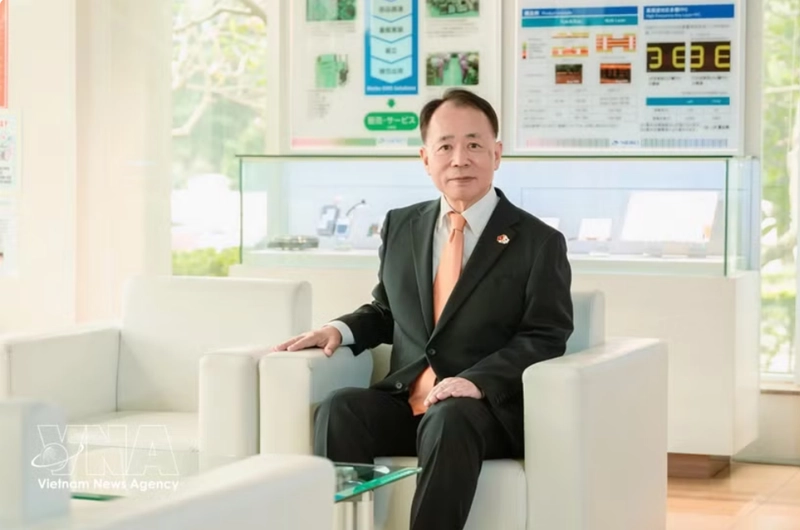
- Tsuchibashi Akito, Chairman of the Japan Chamber of Commerce and Industry in Viet Nam (JCCI), confirmed that the upcoming official visit by General Secretary and President To Lam to Japan is anticipated to establish a new 50-year vision for bilateral economic ties.
- Japan maintains its position as Viet Nam’s primary provider of Official Development Assistance (ODA), a top foreign direct investment (FDI) source, a major trading partner, and a core labor cooperation partner.
- The JCCI commended the Vietnamese Government’s structured corporate dialogue efforts, highlighting key consultative sessions led by former Prime Minister Pham Minh Chinh and incumbent Prime Minister Le Minh Hung.
- Three primary strategic priorities were identified for future collaboration: elite workforce training through university-industry linkages, energy transition via the Asia Zero Emission Community (AZEC), and institutional administrative streamlining.
- Japanese corporate leadership affirmed their commitment to assisting Viet Nam in achieving its high-income nation target by 2045 through technology transfer, digital innovation, and supply chain integration.
Japan (Japan Daily News) November 6, 2026 – Japanese business leaders have formally reaffirmed their long-term commitment to Viet Nam, pledging to convert political trust between the two nations into structured economic cooperation across green technology, workforce development, and institutional reform. Speaking in an exclusive interview with the Viet Nam News Agency, Tsuchibashi Akito, Chairman of the Japan Chamber of Commerce and Industry in Viet Nam (JCCI), stated on Friday, 6 November 2026, that Japanese enterprises view Viet Nam not simply as an investment destination, but as an essential co-development partner. The statements arrive ahead of an official visit to Japan by General Secretary of the Communist Party of Viet Nam Central Committee and President To Lam, an engagement expected to frame bilateral relations for the next 50 years under the Comprehensive Strategic Partnership framework.
- What Is the Expected Impact of General Secretary To Lam’s Official Visit to Japan?
- How Is the Vietnamese Government Engaging with Japanese Foreign Investors?
- What Are the Three Priority Areas for Future Viet Nam-Japan Economic Cooperation?
- Background of the Particular Development After the News
- How This Development Can Affect Investors, Industry Sectors, and the Vietnamese Workforce
What Is the Expected Impact of General Secretary To Lam’s Official Visit to Japan?
As reported by economic correspondents at the Viet Nam News Agency (VNA) and VnEconomy, corporate leadership within the Japanese business community views the upcoming diplomatic delegation as a pivotal moment for bilateral trade and industrial alignment.
Tsuchibashi Akito, Chairman of the Japan Chamber of Commerce and Industry in Viet Nam (JCCI), emphasized that the visit by General Secretary and President To Lam comes at a historic juncture following the 2023 elevation of diplomatic ties to a Comprehensive Strategic Partnership for Peace and Prosperity in Asia and the World.
As reported by VNA journalist Le Phuong, Tsuchibashi Akito stated: “The upcoming official visit to Japan by General Secretary of the Communist Party of Viet Nam Central Committee and President To Lam is expected to open a new vision for the next 50 years of bilateral cooperation and further deepen the Viet Nam-Japan Comprehensive Strategic Partnership.”
Tsuchibashi noted that since Viet Nam instituted its Doi Moi (Renewal) economic reforms, Japan has acted as a pioneer investor, consistently backing the nation’s modernization initiatives. Today, Japan remains Viet Nam’s largest provider of Official Development Assistance (ODA), a major source of foreign direct investment (FDI), an essential labor market partner, and one of its largest two-way trading partners.
How Is the Vietnamese Government Engaging with Japanese Foreign Investors?
According to reporting by VCCI News and VnEconomy, the JCCI leadership praised the administrative responsiveness demonstrated by state authorities in Hanoi.
Tsuchibashi highlighted the frequency of direct consultative forums between the executive branch of the Vietnamese Government and foreign investors. As reported by VnEconomy, Tsuchibashi Akito stated: “During 2025-2026, then Prime Minister Pham Minh Chinh met with Japanese businesses three times, while incumbent Prime Minister Le Minh Hung has also chaired direct dialogue sessions.” He noted that these recurring high-level sessions demonstrate strong institutional trust in Japanese corporate entities as enduring economic partners.
Japanese enterprises contribute directly to Viet Nam’s broader macroeconomic performance through capital deployment, high-value employment creation, corporate tax contributions, technical skill transfer, and domestic supply chain expansion. Chairman Tsuchibashi observed that this corporate involvement will expand in scale as Viet Nam shifts its domestic manufacturing base toward high-value-added sectors to strengthen its regional industrial competitiveness.
What Are the Three Priority Areas for Future Viet Nam-Japan Economic Cooperation?
As detailed in the VNA interview, the JCCI outlined a structured blueprint for future bilateral collaboration, prioritizing workforce capacity, clean energy infrastructure, and regulatory efficiency.
Tsuchibashi identified three distinct operational pillars:
- Developing High-Quality Human Resources: Establishing tighter institutional links between university research facilities, technical institutes, and private enterprises across both nations.
- Promoting Green Transition and Energy Security: Accelerating technology transfer under the Japanese Government’s Asia Zero Emission Community (AZEC) framework to support industrial decarbonization.
- Optimizing the Investment Environment: Strengthening legal transparency, ensuring regulatory predictability, and streamlining administrative procedures for commercial entities.
Addressing human capital mobility, Tsuchibashi pointed to the growing number of Vietnamese professionals and students residing in Japan. As reported by VNA, Tsuchibashi Akito stated: “This creates a channel for transferring knowledge, technology and experience back to Viet Nam, beyond simply facilitating labor mobility.” He urged both governments to expand existing bilateral vocational and academic training programs.
Regarding domestic regulatory reform, Tsuchibashi called for continuous policy stability. As reported by VnEconomy, Tsuchibashi Akito stated: “A stable and transparent business environment will help attract new investment, promote technology transfer and human resource development, and bring benefits to both countries.”
He concluded by framing the commercial relationship around long-term economic alignment: “Japanese businesses regard Viet Nam not merely as a consumer market or investment destination, but as a partner in shared development. As Viet Nam works towards becoming a developed, high-income country by 2045, Japanese companies will continue contributing through workforce training, technology transfer, green transition, digital innovation, and stronger participation by Vietnamese firms in industrial value chains.”
Background of the Particular Development After the News
The reaffirmation of support from the Japanese business community follows decades of deep economic integration between Hanoi and Tokyo. Following the formal upgrade of ties to a Comprehensive Strategic Partnership in late 2023, both nations have worked to align their long-term development strategies. Japan has historically funded major infrastructure megaprojects across Viet Nam—including deep-water ports, urban mass rapid transit (MRT) networks, and international airports—via long-term ODA loans.
Concurrently, Viet Nam has emerged as a preferred destination for Japanese manufacturers seeking to diversify global supply chains away from single-market risks under a “Japan+1” strategy. The current policy focus reflects Viet Nam’s transition away from low-cost assembly manufacturing toward advanced technology, semiconductor packaging, and green energy generation. However, achieving these targets requires resolving systemic bottlenecks, including domestic power grid constraints, complex land-use approval procedures, and a shortage of highly specialized engineers, topics that remain central to ongoing dialogues between the JCCI and the Vietnamese Cabinet.
How This Development Can Affect Investors, Industry Sectors, and the Vietnamese Workforce
The continued expansion of the Viet Nam-Japan Comprehensive Strategic Partnership will produce significant operational, financial, and structural impacts across multiple segments of the regional economy.
Impact on Domestic Manufacturers and Industrial Supply Chains
For Vietnamese domestic enterprises, closer integration with Japanese corporate networks will accelerate technology adoption and quality management standards. As Japanese original equipment manufacturers (OEMs) expand operations, local tier-1 and tier-2 suppliers will gain increased opportunities to enter global value chains. However, domestic firms will need to invest heavily in international quality certifications and automation to meet strict Japanese engineering specifications.
Impact on the Energy Sector and Green Infrastructure
For power generation companies, infrastructure developers, and clean technology firms, Japan’s commitment via the Asia Zero Emission Community (AZEC) initiative will unlock concessionary financing and advanced technology for renewable energy projects. Collaborative ventures in liquefied natural gas (LNG), offshore wind, and industrial solar installations are expected to accelerate, assisting Viet Nam in fulfilling its Net Zero 2050 climate commitments while ensuring baseline energy security for heavy industry.
Impact on Technical Workforce and Academic Institutions
For Vietnamese university students, skilled workers, and technical professionals, expanded human resource initiatives will open structured pathways for international training and employment. Returning professionals who acquire advanced industrial experience in Japan will command premium positions in domestic manufacturing, semiconductor development, and engineering software sectors, accelerating Viet Nam’s broader transition toward a knowledge-based economy by 2045.