Key Points:
- Critical Parliamentary Deliberations: Prime Minister Sanae Takaichi’s attendance at the House of Representatives Financial Affairs Committee is being positioned by opposition lawmakers as a mandatory prerequisite for passing the government’s flagship consumption tax reduction bill through the Lower Chamber by Friday.
- Proposed Consumption Tax Cut: The legislation proposes reducing the consumption tax rate on food items from 8% to 1% for a temporary two-year period, alongside providing cash benefit payments equivalent to 1% of consumption tax to low- and middle-income workers.
- Tight Legislative Timeline: The ruling Liberal Democratic Party (LDP) aims to conduct committee and plenary votes in the Lower House on Friday before transmitting the measure to the House of Councillors (Senate) for final enactment ahead of the parliamentary session’s scheduled end on December 12.
- Deliberation Hours Threshold: Opposition parties are demanding a minimum of 30 hours of Lower House committee debate; following Wednesday’s scheduled meeting, total committee time will reach 28 hours (excluding expert testimony).
- Bipartisan Compromise Proposal: Yuichi Goto, parliamentary affairs leader for a centrist Lower House group comprising the Democratic Reform Party and Komeito, has formally submitted a proposal to the LDP for Takaichi to participate in two hours of direct committee questioning.
Japan (Japan Daily News) October 31, 2026 – The passage of landmark legislation designed to slash Japan’s consumption tax on food items hinges directly on whether Prime Minister Sanae Takaichi will agree to testify before a House of Representatives committee. As reported by political correspondents for Jiji Press on Saturday, 31 October 2026, the ruling Liberal Democratic Party (LDP) is pushing to hold decisive committee and floor votes in the Lower House as early as Friday. The controversial bill seeks to lower the food tax rate from 8% to 1% for a two-year window while distributing targeted cash relief to low- and middle-income earners. However, opposition lawmakers have made Takaichi’s direct attendance at committee deliberations a non-negotiable condition for allowing the bill to clear the chamber before the extraordinary parliamentary session adjourns on 12 December.
- Key Points:
- Why is Prime Minister Takaichi’s attendance critical to the Lower House committee votes?
- How close are parliamentary deliberations to meeting opposition time demands?
- What are the main economic provisions and debate points in the tax cut bill?
- Background of Japan’s Consumption Tax System and Political Deliberations
- Parliamentary Approval, Household Budgets, and the Japanese Economy
Why is Prime Minister Takaichi’s attendance critical to the Lower House committee votes?
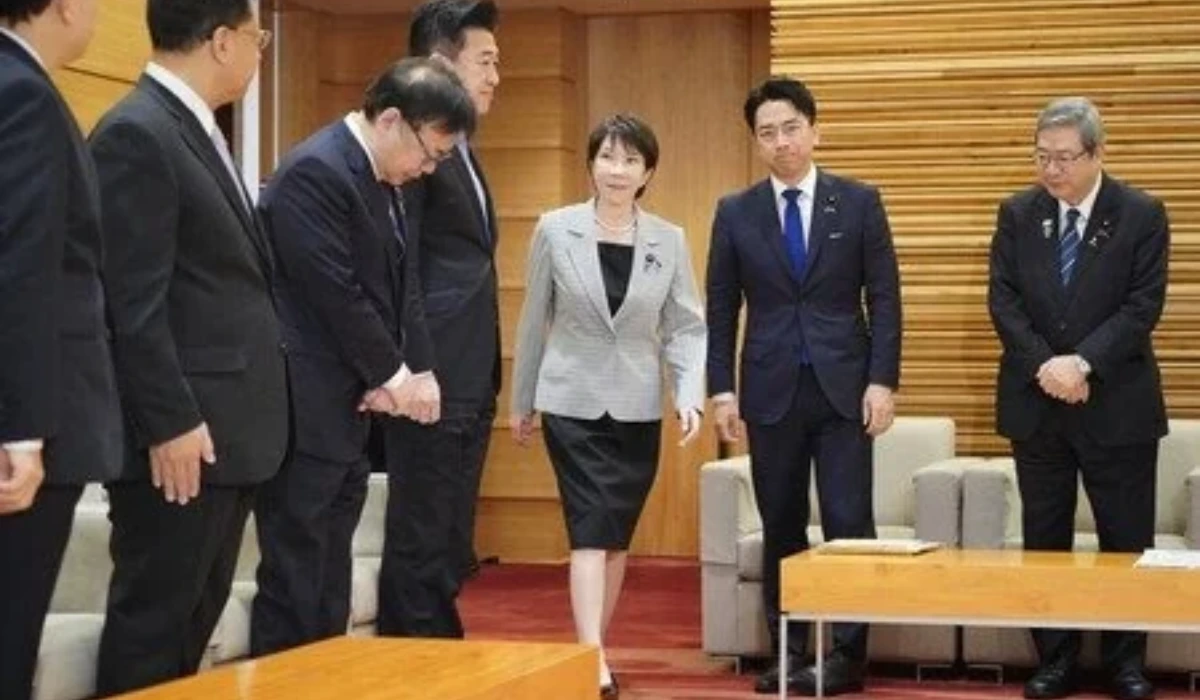
As reported by Jiji Press political reporters in Tokyo, opposition parties in the House of Representatives have established a united front, demanding that Prime Minister Sanae Takaichi personally appear before the Lower House Financial Affairs Committee to defend the administration’s fiscal framework.
The ruling LDP-led coalition intends to wrap up Lower House committee considerations and conduct a full plenary vote on Friday. Following the chamber’s approval, the bill would immediately be transmitted to the Senate—formerly known as the House of Councillors—giving parliament adequate runway to enact the measure into law before December 12.
Opposition members argue that because the tax cut represents the first reduction in Japan’s consumption tax since its introduction in 1989, the head of government must be held directly accountable for answering detailed questions regarding revenue coverage and structural economic impacts.
How close are parliamentary deliberations to meeting opposition time demands?
As reported by political news editors at Jiji Press, opposition parties have insisted on completing approximately 30 hours of rigorous Lower House deliberations on the tax bill before allowing it to move to a formal floor vote.
According to committee schedules:
- Current Accumulation: Deliberation time logged by the Financial Affairs Committee will reach 28 hours upon the conclusion of its next formal session on Wednesday.
- Exclusions: The 28-hour metric strictly excludes non-debate time spent gathering testimony and opinions from external economic experts.
- The Gap: A two-hour shortfall remains between the LDP’s targeted schedule and the opposition’s required 30-hour debate threshold.
To break the procedural impasse, Yuichi Goto, parliamentary affairs leader for a centrist Lower House caucus comprising the Democratic Reform Party and Komeito, submitted a compromise proposal to the ruling LDP. As reported by Jiji Press, Yuichi Goto proposed that Prime Minister Takaichi attend exactly two hours of financial committee deliberations, a move that would simultaneously fulfill the opposition’s 30-hour debate requirement and allow the LDP to hold its planned Friday vote.
What are the main economic provisions and debate points in the tax cut bill?
As reported by economic correspondents for Kyodo News and The Japan Times, the government’s consumption tax reduction bill contains two core relief mechanisms designed to cushion Japanese households against persistent global inflation:
- Food Tax Reduction: Temporarily reducing the reduced consumption tax rate applied to food and non-alcoholic beverages from 8% down to 1% for a period of two years.
- Targeted Cash Benefits: Paying annual cash allowances equivalent to 1% of consumption tax to low- and middle-income workers to bring their effective baseline food tax burden close to zero.
Despite widespread public support for tax relief, the legislation has faced intense scrutiny from opposition legislators regarding its estimated 5 trillion yen ($32 billion USD) annual revenue shortfall. Opposition leaders have criticized the government for failing to outline permanent revenue offsets or specify precise income eligibility brackets for the supplementary benefit payments.
In response, Prime Minister Takaichi and Finance Minister Satsuki Katayama have repeatedly stated that the administration will secure necessary funding through expenditure restructuring and non-tax revenue adjustments rather than issuing deficit-covering government bonds.
Background of Japan’s Consumption Tax System and Political Deliberations
Japan first introduced a national consumption tax in 1989 at a flat rate of 3%, which was subsequently raised to 5% in 1997, 8% in 2014, and 10% in October 2019. During the 2019 rate hike, the Japanese government established a dual-tax system, retaining an 8% reduced rate for daily groceries and non-alcoholic beverages while applying the standard 10% rate to dining out, alcohol, and general retail goods.
Following her election and Cabinet formation, Prime Minister Sanae Takaichi prioritized household cost-of-living relief, putting forward the two-year 1% food tax proposal during her major policy speeches. However, implementing a temporary tax cut presents administrative challenges for small businesses, restaurants, and agricultural producers, while placing fiscal pressure on local municipalities that depend on national consumption tax redistribution transfers. As a result, Diet committee debates have focused heavily on ensuring proper regulatory support for small enterprises before the proposed rate changes take effect.
Parliamentary Approval, Household Budgets, and the Japanese Economy
The upcoming negotiations on Wednesday regarding Prime Minister Takaichi’s committee appearance are expected to determine the immediate trajectory of Japanese fiscal policy through late 2026.
For Prime Minister Sanae Takaichi and the ruling LDP, accepting the opposition’s two-hour committee attendance proposal is predicted to clear the primary legislative hurdle in the Lower House, paving the way for a successful chamber vote on Friday. Securing Lower House passage by early November will allow the ruling coalition sufficient time to navigate the Senate (House of Councillors) and finalize the bill into law prior to the December 12 adjournment.
For Japanese households, small business owners, and financial markets, the enactment of the 1% food tax rate is predicted to provide immediate disinflationary relief to consumer grocery bills starting in the upcoming fiscal year. However, retail industry analysts caution that food manufacturers and restaurant operators will face near-term compliance costs to adjust point-of-sale systems. Meanwhile, international bond markets will closely monitor the Cabinet’s upcoming 2027 budget disclosures to confirm that the tax relief measures are fully funded without expanding Japan’s national debt.