Key Points
- Arrests Made in Osaka: The Osaka Prefectural Police arrested three individuals, including a 17-year-old high school student, over a coordinated attempt to smuggle protected exotic wildlife into Japan.
- Suspects Identified: The arrested individuals include Takayuki Fukushima, a 57-year-old construction worker from Tondabayashi, Osaka Prefecture; Sotaro Yamazaki, a 26-year-old resident of Tokyo; and an unnamed 17-year-old high school student.
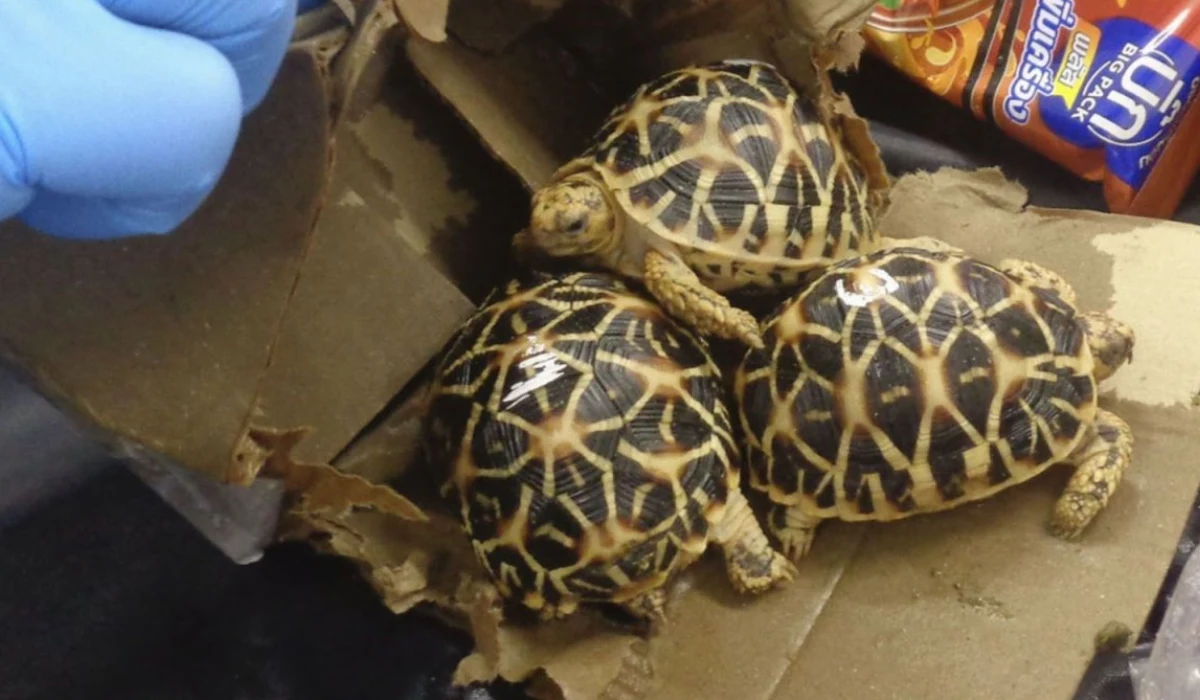
- Contraband Intercepted: Authorities seized three Indian star tortoises—protected under Appendix I of CITES—along with 13 crayfish classified as specified invasive species and three snakehead fish.
- Method of Operation: The 17-year-old student travelled to Thailand to purchase the animals after being recruited on social media by Fukushima, while Yamazaki financed the travel expenses.
- Customs Discovery: Osaka Customs officers intercepted the contraband during a baggage check at Kansai International Airport, discovering the tortoises wrapped in damp cardboard concealed inside a suitcase.
- Additional Statutory Violations: Fukushima was further arrested under the Act on Conservation of Endangered Species of Wild Fauna and Flora for separate illicit sales of a rare spotted pond turtle.
Japan (Japan Daily News) October 28, 2026 – Japanese law enforcement authorities have arrested three individuals—including a 17-year-old high school student—on suspicion of conspiring to smuggle internationally protected Indian star tortoises, invasive crayfish, and snakehead fish from Thailand into Japan in violation of the Customs Act. The Osaka Prefectural Police revealed on Wednesday that the minor was intercepted by Osaka Customs officials at Kansai International Airport on May 8, 2026, after officers discovered the contraband hidden inside a suitcase. Authorities allege that 57-year-old Takayuki Fukushima instructed the teenager to acquire the fauna for lucrative resale on the domestic black market, while 26-year-old Tokyo resident Sotaro Yamazaki financed the international travel expenses.
- Key Points
- How Was the International Wildlife Smuggling Scheme Uncovered at Kansai International Airport?
- What Roles Did the Three Suspects Play in the Alleged Smuggling Conspiracy?
- Why Are Indian Star Tortoises and the Other Seized Species Heavily Regulated Under International and Japanese Law?
- Background of Exotic Pet Smuggling and Wildlife Crime Enforcement in Japan
- How This Enforcement Action Will Impact Exotic Pet Markets and Online Wildlife Trade
How Was the International Wildlife Smuggling Scheme Uncovered at Kansai International Airport?
As reported by Kyodo News and published by the Bangkok Post, the illicit trafficking operation was dismantled when custom officers conducted a targeted luggage inspection on a 17-year-old high school student arriving on an international flight from Thailand at Kansai International Airport in Osaka Prefecture.
During the physical search of the teenager’s checked suitcase, Osaka Customs officers discovered three live Indian star tortoises wrapped in wet cardboard. Alongside the endangered reptiles, inspectors uncovered 13 live crayfish—classified under Japanese law as specified invasive alien species—and three live snakehead fish concealed within the passenger’s luggage.
As reported by Jiji Press and translated by The Japan Times, police stated that the student had been operating as an informal online vendor, selling fish, newts, and other aquatic creatures through social media platforms prior to his recruitment into the international smuggling scheme.
What Roles Did the Three Suspects Play in the Alleged Smuggling Conspiracy?
As reported by The Japan Times, police investigations established that the smuggling attempt was a structured joint enterprise involving division of labor across different regions of Japan.
According to official police reports, the suspects operated under the following arrangement:
- Takayuki Fukushima (57): A construction worker residing in Tondabayashi, Osaka Prefecture, Fukushima allegedly made contact with the minor on social media after noticing his online animal sales activities. Fukushima instructed the high school student to travel to Thailand to procure Indian star tortoises, intending to resell the highly sought-after reptiles in Japan at elevated black-market prices.
- Sotaro Yamazaki (26): Residing in Tokyo, Yamazaki provided the necessary financial backing for the operation, funding the teenager’s travel expenses to and from Thailand.
- The 17-Year-Old High School Student: Unnamed under Japanese juvenile protection laws, the Osaka teenager acted as the courier, traveling to Thailand in May 2026, purchasing the fauna, and attempting to transport the animals back through customs in his personal luggage.
In addition to the primary customs violation charges, police arrested Fukushima on suspicion of violating the Act on Conservation of Endangered Species of Wild Fauna and Flora over his involvement in the separate, unauthorized domestic sale of a rare spotted pond turtle. Police have not publicly disclosed whether the three suspects have admitted to or denied the formal charges listed in the arrest warrants.
Why Are Indian Star Tortoises and the Other Seized Species Heavily Regulated Under International and Japanese Law?
As reported by Jiji Press, the Indian star tortoise (Geochelone elegans) is strictly protected under the Convention on International Trade in Endangered Species of Wild Fauna and Flora (CITES), also widely known as the Washington Convention.
Listed under CITES Appendix I, all international commercial trade in wild-caught Indian star tortoises is strictly prohibited to prevent the species from facing extinction driven by habitat loss and exotic pet trade demand. In Japan, bringing CITES Appendix I species across national borders without specialized governmental permits constitutes a severe criminal breach of national customs legislation.
Furthermore, the 13 crayfish seized during the airport inspection are classified by Japanese environmental authorities as specified invasive alien species. Under Japanese biosecurity laws, the unauthorized importation, transport, or keeping of specified invasive species is strictly banned to prevent invasive fauna from establishing wild populations that decimate native aquatic ecosystems and spread pathogens.
Background of Exotic Pet Smuggling and Wildlife Crime Enforcement in Japan
The arrest of the Osaka syndicate reflects an ongoing battle by Japanese customs agencies and prefectural police forces against illegal exotic pet trafficking networks connecting East Asia with Southeast Asian wildlife markets. Due to high domestic demand for rare reptiles, amphibians, and specialized freshwater fish, Japan remains a lucrative destination for trafficked wildlife.
Historically, illegal traders have targeted public open-air markets and underground breeding operations in Southeast Asian transit hubs—particularly in Thailand and Indonesia—to acquire CITES-regulated reptiles. Indian star tortoises are particularly prized among private collectors due to their distinct shell patterns, with individual specimens fetching thousands of dollars on unregulated secondary markets.
Over recent years, law enforcement agencies across Asia have noted a growing trend wherein criminal organizers utilize social media networks and messaging applications to groom and recruit young individuals or financially vulnerable couriers. By delegating international travel and physical transport to third parties, syndicate organizers attempt to insulate themselves from direct customs interception. In response, Osaka Customs and Japanese law enforcement have intensified digital surveillance on social media sales channels and deployed enhanced baggage screening technologies at major international gateways, including Kansai International Airport and Tokyo’s Narita Airport.
How This Enforcement Action Will Impact Exotic Pet Markets and Online Wildlife Trade
The dismantling of this Osaka-Tokyo smuggling loop is expected to generate immediate operational and regulatory ripples across exotic animal trade networks, social media platforms, and biosecurity enforcement bodies in Japan.
1. Increased Surveillance on Social Media Animal Sales
Following the disclosure that the 17-year-old suspect was recruited after selling aquatic life on social media platforms, Japanese law enforcement and cyber-crime units will likely expand monitoring of private online trading groups. Social media platforms operating in Japan will face heightened pressure to implement stricter content moderation protocols, automated keyword flagging, and mandatory account verification for users listing live animals or specialized exotic fauna for sale.
2. Tightened Border Biosecurity Controls for Passenger Baggage
The interception of contraband packed in damp cardboard inside passenger luggage will prompt Osaka Customs and broader Japanese port authorities to implement elevated screening protocols for incoming flights originating from known wildlife export hubs, particularly Bangkok. Travelers arriving from Southeast Asia are likely to face increased utilization of specialized agricultural and wildlife detection sniffer dogs, along with higher rates of mandatory luggage X-ray scans at Kansai and Narita airports.
3. Regulatory Chilling Effect on Unregistered Reptile Collectors and Retailers
The dual charges brought against Takayuki Fukushima under both the Customs Act and the Act on Conservation of Endangered Species of Wild Fauna and Flora signal an aggressive prosecutorial stance aimed at buyers and middlemen, rather than sole focus on physical couriers. This approach is expected to deter illicit private buyers and unregistered reptile dealers within Japan, forcing secondary black-market prices higher while increasing the legal risk for collectors purchasing unpapered CITES-listed species.