
- Microsoft EMIB Packaging and Xeon Agreement: Disclosed on 18 November 2026, Microsoft Corp. became the first publicly named customer to adopt Intel Corp.’s Embedded Multi-die Interconnect Bridge (EMIB) advanced packaging technology for custom Azure chips under a long-term agreement that also confirms a multi-year supply of Xeon server processors, including next-generation Diamond Rapids chips.
- Ajinomoto Build-up Film (ABF) Bottleneck: Because EMIB bridges sit inside substrate layers that rely on Ajinomoto Build-up Film (ABF)—produced by Japanese seasoning maker Ajinomoto Co., which reportedly holds 95% or more of the global ABF market and ran at full capacity in Q2 2026 before announcing roughly 30% price increases in May 2026—Intel’s packaging expansion faces supply constraints outside its direct control.
- First External 18A-P Customer Announcement: Speaking at the TomorrowX Summit in Austin, Texas, on 18 November 2026, Intel Chief Executive Officer Lip-Bu Tan announced that Intel had signed its first external customer for its leading-edge process, later clarified by technology chief Pushkar Ranade as the upgraded 18A-P node.
- Limited Outside Foundry Revenue Despite Growth: While Intel’s third-quarter 2026 foundry revenue rose 58% year over year to $6.7 billion, external customers generated $411 million—up from $293 million in Q2 2026 and $32 million a year earlier, representing roughly 6% of foundry sales—with most of the sequential gain linked to a non-recurring customer program and Chief Financial Officer David Zinsner noting substantial work remains toward sustainable profitability.
- Cautious Wall Street Reaction: Intel shares slipped roughly 1% on the day of the Microsoft announcement and closed near $51 on 20 November 2026—more than 60% below their 22 June 2026 record close of $140.94—amid a consensus Hold rating across 49 analysts and an average 12-month price target of $90.65.
Japan (Japan Daily News) November 23, 2026 – Intel Corp. has secured Microsoft Corp. as the first publicly named customer for its Embedded Multi-die Interconnect Bridge (EMIB) advanced packaging technology under a long-term agreement disclosed on 18 November 2026 that also covers multi-year Xeon server processor supply. While the deal strengthens Intel Foundry’s credibility and coincides with CEO Lip-Bu Tan announcing a first external client for the upgraded 18A-P process at the TomorrowX Summit in Austin, Texas, scaling packaging depends heavily on Ajinomoto Co.’s Ajinomoto Build-up Film (ABF) amid tight supply and price increases. Meanwhile, outside foundry revenue remains a small share of Intel’s total foundry business, keeping Wall Street cautious.
- Why Does a Japanese Seasoning Maker Matter to Intel’s EMIB Packaging?
- What Do Microsoft and Intel Gain From the Deal and the 18A-P Announcement?
- Why Does Outside Foundry Revenue Remain Small and Wall Street Cautious?
- How Do the Key Figures and Milestones for Intel Compare?
- Background of the Particular Development After the News
- How This Development Can Affect Investors, Cloud Buyers, and Intel Foundry
As reported by TheStreet and Tom’s Hardware, Intel Corp. (INTC) has secured Microsoft Corp. (MSFT) as the first publicly named customer for its EMIB advanced packaging technology, a credibility win for a foundry business that is still proving it can compete for outside work, though the film at the base of that packaging comes from a single Japanese supplier that Intel does not control.
Under a long-term agreement disclosed on 18 November 2026, Microsoft will use EMIB to package chips it designs for its Azure cloud, while the same announcement confirmed a multi-year supply of Xeon server processors, including next-generation parts code-named Diamond Rapids.
For Intel, the value is as much reputational as financial. Intel Foundry has spent heavily to court external customers, and few names carry more weight than a hyperscaler. As reported by Matt Bryson of Wedbush via Seeking Alpha and TheStreet, Wedbush analyst Matt Bryson called the win a “positive step” but said its financial significance is not yet clear, adding that the bigger question is how quickly Intel’s packaging business can scale “amidst ABF constraints”.
Why Does a Japanese Seasoning Maker Matter to Intel’s EMIB Packaging?
Reporting from Tom’s Hardware and TheStreet highlights how a material supplied by a food and amino-acid manufacturer underpins high-end semiconductor packaging:
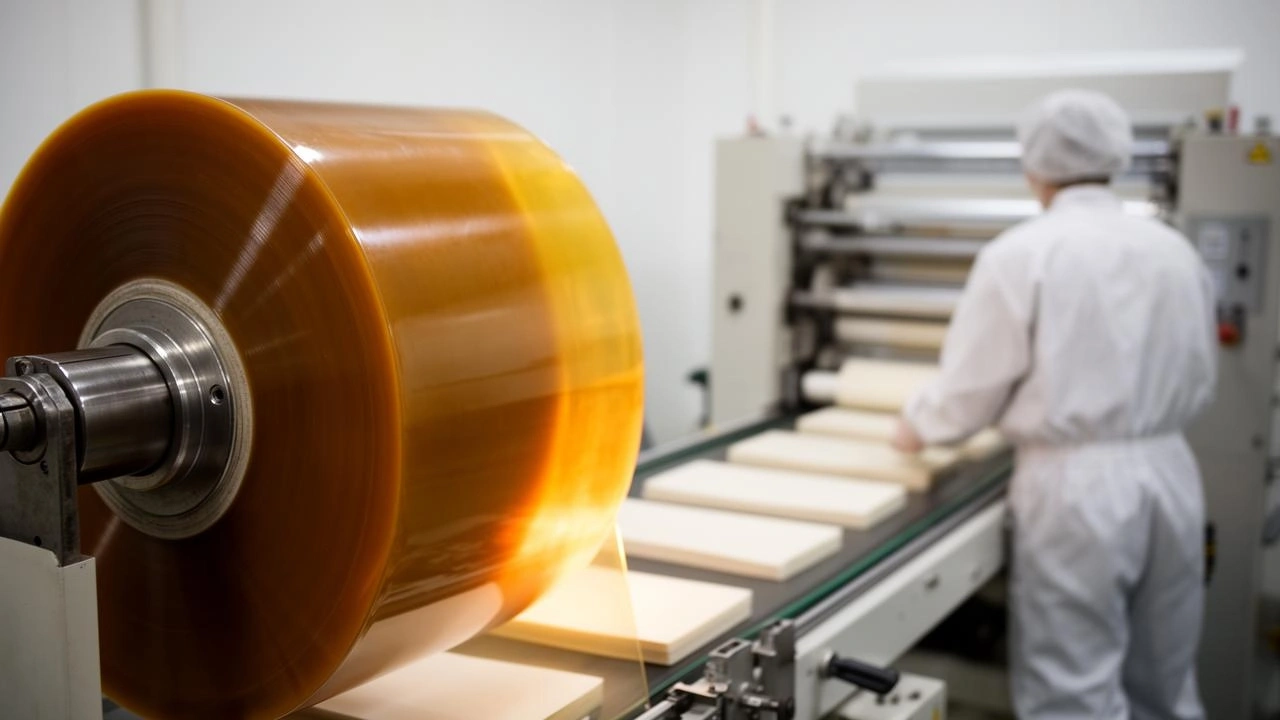
- Role of Ajinomoto Build-up Film (ABF): ABF stands for Ajinomoto Build-up Film, made by Ajinomoto Co., the Japanese company best known for monosodium glutamate (MSG) seasoning. According to Tom’s Hardware, ABF forms the insulating, wired substrate that connects tiny silicon dies to the circuit boards beneath them, and virtually every advanced chip Intel produces today relies on it.
- Link Between EMIB Bridges and ABF Demand: Because EMIB bridges sit inside that substrate, more packaging orders translate directly into higher demand for the film.
- Market Share, Capacity Load, and Price Increases: Ajinomoto reportedly holds 95% or more of the global ABF market, placing a company better known for seasoning at the foundation of high-end chip packaging. According to Tom’s Hardware, Ajinomoto’s film capacity was running at full load in the second quarter of 2026, and in May 2026 the company told substrate makers it would raise ABF prices by roughly 30%.
What Do Microsoft and Intel Gain From the Deal and the 18A-P Announcement?
The 18 November 2026 disclosures paired packaging and server processor commitments with an update on Intel’s most advanced manufacturing process:
- How EMIB Works for Custom Azure Chips: Advanced packaging joins separate pieces of silicon into a single working chip. EMIB is a small bridge embedded in the chip’s base that links those pieces. Microsoft designs its own Azure chips and requires a partner to package them at volume; both companies said the arrangement is intended to give Microsoft customers a more “predictable, scalable and resilient” foundation.
- Securing Xeon Supply Amid Strong Demand: Adding Intel gives Microsoft another place to build when capacity is tight, while the Xeon commitment carries significant weight. Intel Chief Executive Officer Lip-Bu Tan said Intel’s “immediate priority” is unlocking supply to meet “extraordinary demand” for Xeon chips, and a multi-year agreement effectively secures Microsoft’s place in line.
- First External Customer on the 18A-P Node: Separately, speaking at the TomorrowX Summit in Austin, Texas, on 18 November 2026, Intel Chief Executive Officer Lip-Bu Tan said Intel had signed its first customer for 18A, its most advanced manufacturing process. As reported by CNBC and TheStreet, Intel technology chief Pushkar Ranade later clarified that the customer signed up for 18A-P, an upgraded version of the node. Lip-Bu Tan did not name the company and has stated that Intel will not disclose customer details as a matter of foundry practice.
Why Does Outside Foundry Revenue Remain Small and Wall Street Cautious?
Financial figures and analyst assessments show a gap between strategic customer milestones and current external foundry revenue:
- External Share of Q3 2026 Foundry Revenue: While Intel’s third-quarter 2026 foundry revenue rose 58% year over year to $6.7 billion, outside customers accounted for just $411 million of that total—up from $293 million in the second quarter of 2026 and $32 million a year earlier—representing roughly 6% of third-quarter foundry sales. Intel attributed most of the sequential increase to a non-recurring customer program and noted that substantially all of its foundry business still supports its own products. (Note: Year-earlier and prior-quarter operating losses are derived from Intel’s stated quarter-over-quarter and year-over-year changes.)
- Statement From CFO David Zinsner: Intel Chief Financial Officer David Zinsner said the results “represent meaningful progress, although we still have considerable work ahead of us to deliver a sustainably profitable Foundry business”.
- Share Price Performance and Analyst Targets: Wall Street has not yet treated the announcements as a reason to buy. Intel shares slipped about 1% on the day of the Microsoft announcement and closed near $51 on 20 November 2026, more than 60% below their record close of $140.94 on 22 June 2026. The stock fell nearly 29% on 30 October 2026, the day after Intel guided fourth-quarter revenue to $15 billion to $16 billion, below third-quarter sales of $16.5 billion.
- Consensus Ratings and Revisions: According to Stock Analysis as reported by TheStreet, Intel carries a consensus Hold rating from 49 analysts, with an average 12-month price target of $90.65. Bank of America analyst Vivek Arya reiterated a Hold rating on 12 November 2026 while cutting his target to $80 from $100, and earlier in November 2026 Citi analyst Atif Malik maintained a Buy rating while lowering his target to $100 from $130.
How Do the Key Figures and Milestones for Intel Compare?
A structured summary outlines the core metrics, announcements, and market figures reported across the coverage:
| Metric / Milestone | Reported Figure / Detail | Context & Significance |
| Microsoft Agreement (18 Nov 2026) | First named EMIB packaging customer for Azure chips + multi-year Xeon supply (including Diamond Rapids) | Aims to provide a “predictable, scalable and resilient” foundation. |
| ABF Supply & Pricing | Ajinomoto holds ~95%+ global ABF share; full capacity in Q2 2026; ~30% price increase announced in May 2026 | Crucial substrate input beneath EMIB bridges outside Intel’s direct manufacturing control. |
| 18A-P Node Milestone | First external customer announced by CEO Lip-Bu Tan at TomorrowX Summit in Austin (18 Nov 2026); clarified by Pushkar Ranade as 18A-P | Customer identity undisclosed per Intel foundry practice. |
| Q3 2026 Foundry Revenue | $6.7 billion total (+58% YoY); $411 million external (~6% of foundry total), vs. $293M in Q2 and $32M a year earlier | Most sequential external gain tied to a non-recurring customer program. |
| Stock & Analyst Sentiment | Slipped ~1% on Microsoft news; closed near $51 on 20 Nov 2026 (down >60% from $140.94 on 22 June 2026) | Consensus Hold across 49 analysts; avg. target $90.65; BofA cut to $80 (12 Nov); Citi cut to $100. |
Background of the Particular Development After the News
As artificial intelligence workloads and cloud data-centre demand have grown, chipmakers and hyperscalers have increasingly relied on advanced packaging—such as embedded bridges and multi-die interconnects—to combine compute tiles and memory rather than depending solely on shrinking single-die transistor dimensions. Securing external foundry and packaging customers has been central to Intel’s restructuring effort to compete in contract chip manufacturing while supplying its own server and client processors.
At the same time, modern high-density chip packages depend on specialised materials produced by a concentrated global supply chain. Ajinomoto Build-up Film (ABF), originally developed by Ajinomoto Co. using expertise derived from amino-acid chemistry, became an essential dielectric build-up material for flip-chip substrates across high-performance processors. Because substrate fabrication and film capacity expansion require substantial capital expenditure and long lead times, tight supply and higher input costs can influence packaging throughput and unit economics across the semiconductor industry.
How This Development Can Affect Investors, Cloud Buyers, and Intel Foundry
The Microsoft EMIB and Xeon agreement, alongside the unnamed 18A-P customer and ABF supply dynamics, carries distinct implications for key market participants:
1. Shareholders and Equity Analysts Tracking Foundry Conversion
For investors and analysts covering Intel, future quarterly updates on packaging customer ramps, ABF material availability, and whether Microsoft discloses specific chip programs will be key indicators of whether high-profile wins translate into recurring external revenue and margin improvement.
2. Cloud Hyperscalers and Data-Centre Infrastructure Buyers
For cloud operators and enterprise buyers of server processors, multi-year Xeon commitments—including next-generation Diamond Rapids chips—and alternative EMIB packaging capacity support supply resilience, even as tight component and substrate conditions require close coordination on delivery schedules.
3. Intel Foundry’s Operational Execution on Packaging and 18A-P
For Intel Foundry’s engineering and operations teams, winning marquee interest for EMIB and 18A-P establishes technical credibility, while executing smoothly amid ABF supply constraints and internal product demand will shape how quickly outside revenue grows beyond its current share.