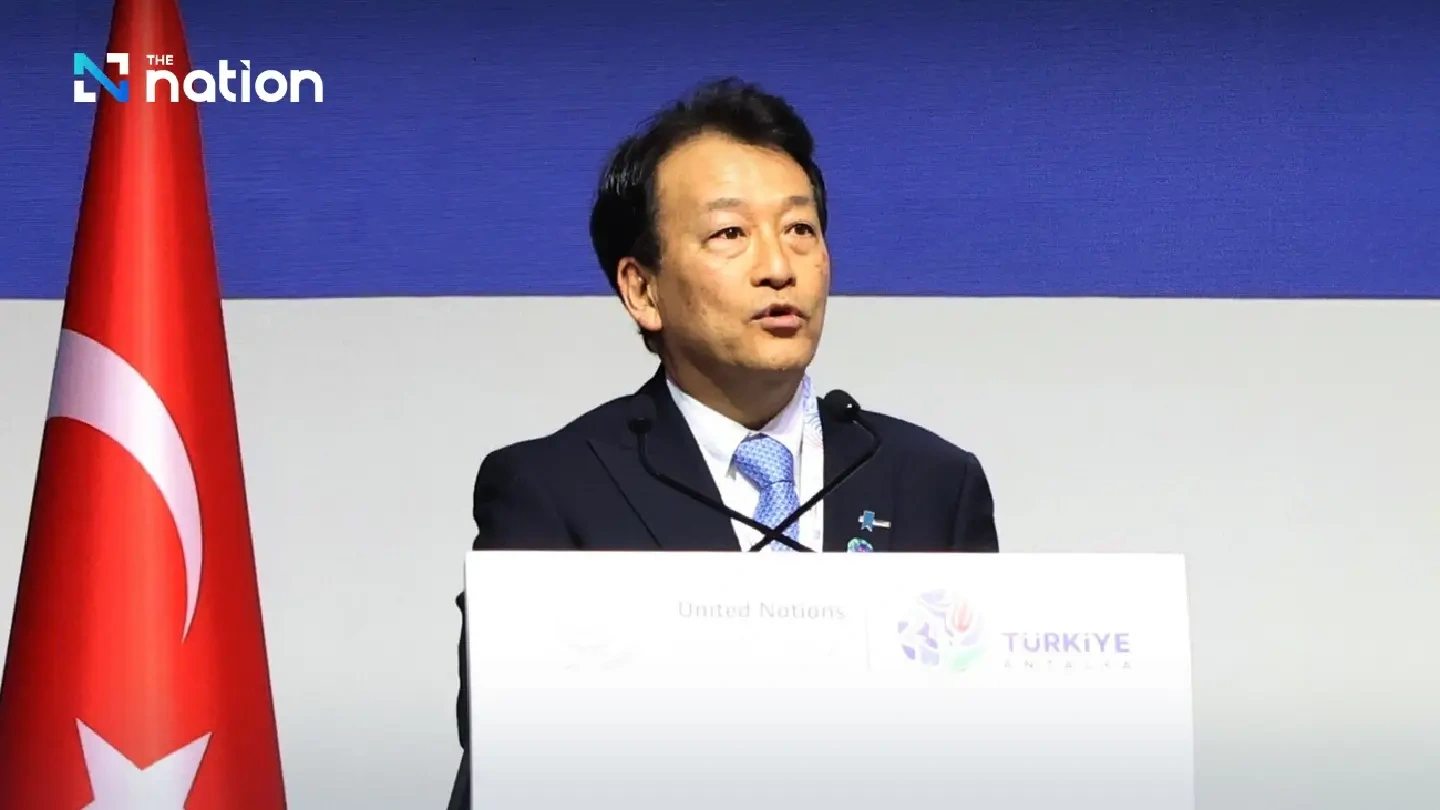
- Call for Accelerated Multilateralism: Addressing the United Nations climate talks in Antalya, Türkiye, on Tuesday, 17 November 2026, Japanese Environment Minister Hiroyoshi Sasagawa urged nations worldwide to accelerate global decarbonization efforts through strengthened multilateral cooperation.
- Broadened Climate Finance Base: Sasagawa called for expanding the contributor base for international climate finance beyond traditional developed nations to include other capable economies—an apparent reference to emerging economic powers such as China.
- Reaffirmation of Japanese Support: The environment minister reaffirmed Tokyo’s ongoing financial commitment to assisting developing nations in combating climate change and building resilience.
- Launch of Asia-Pacific EWS Network: Sasagawa announced the official launch of the Network for Early Warning Systems (EWS) in the Asia-Pacific Region, designed to enable participating countries to pool expertise and share practical methodologies for community-level natural disaster warnings.
- Urgent Global Challenge: Emphasizing the existential gravity of environmental degradation, Sasagawa described climate change as an urgent challenge confronting all of humanity that requires immediate, collective intervention.
Japan (Japan Daily News) November 18, 2026 – Japan has urged an acceleration of global carbon emission reductions through international multilateralism at the ongoing United Nations climate talks in Antalya, Türkiye. Speaking before international delegates on Tuesday, 17 November 2026, Japanese Environment Minister Hiroyoshi Sasagawa emphasized that climate change represents an urgent challenge facing all of humanity, requiring synchronized and immediate action. Alongside calls for faster decarbonization, Sasagawa pressed for a broader pool of international financial contributors—specifically pointing toward capable nations beyond traditional developed economies to support developing states. Furthermore, the Japanese delegation announced the creation of a regional early warning network to enhance disaster preparedness across the Asia-Pacific.
- What Is the Network for Early Warning Systems in the Asia-Pacific Region?
- How Do Japan’s Proposals Compare With Current International Climate Finance Frameworks?
- Background of the Particular Development After the News
- How This Development Can Affect Climate Negotiators, Emerging Economies, and Asia-Pacific Vulnerable Nations
As reported by environmental and international affairs correspondents covering the UN climate summit in Antalya, Türkiye, Japan’s environment minister, Hiroyoshi Sasagawa, told the United Nations climate talks on Tuesday, 17 November 2026, that countries must work together to cut carbon emissions significantly faster.
Addressing the assembly of global delegates, Hiroyoshi Sasagawa stated: “I would like to emphasize the importance of accelerating global decarbonization efforts based on multilateralism.” Describing the escalating crisis, he characterized climate change as “an urgent challenge facing all of humanity.”
In addition to emission reduction targets, Hiroyoshi Sasagawa addressed the contentious debate surrounding international climate finance, calling for more governments to help fund mitigation and adaptation efforts in developing countries. Commenting on the distribution of financial responsibilities, Hiroyoshi Sasagawa asserted: “It is essential to broaden the contributor base to include countries capable of contributing as well as developed countries.” Diplomatic analysts noted that this deliberate remark appeared to reference major emerging economies, particularly China, urging them to shoulder greater international financial responsibility commensurate with their economic scale and emission output.
Reiterating Tokyo’s dedication to international solidarity, Hiroyoshi Sasagawa reaffirmed Japan’s own support for developing nations, stating that his government “remains committed to…providing climate finance” to assist vulnerable regions in tackling the multifaceted impacts of climate change.
What Is the Network for Early Warning Systems in the Asia-Pacific Region?
As reported by conference delegates tracking regional resilience initiatives, Hiroyoshi Sasagawa used the Antalya summit platform to unveil a major practical cooperation framework:
- Inauguration of the Network: Hiroyoshi Sasagawa formally announced the launch of the Network for EWS in the Asia-Pacific Region.
- Knowledge and Resource Pooling: Through this newly established network, participating countries across the Asia-Pacific will be able to pool their collective knowledge, technical expertise, and practical methodologies.
- Community Disaster Preparedness: The primary objective of the network is to enhance the capability of local communities to receive early warnings regarding natural disasters, mitigating loss of life amid increasing meteorological volatility.
How Do Japan’s Proposals Compare With Current International Climate Finance Frameworks?
A structured overview illustrates the core diplomatic positions, financial expectations, and regional initiatives highlighted by the Japanese delegation at the Antalya climate summit:
| Policy Area / Initiative | Japanese Position / Proposal | International Context & Implications |
| Decarbonization Pace | Urged faster global emission cuts through strengthened multilateral cooperation. | Aligns with global stocktake goals under the Paris Agreement to limit temperature rises. |
| Climate Finance Contributors | Demanded expansion beyond traditional developed nations to include capable emerging economies (e.g., China). | Challenges legacy UN classifications dividing contributors strictly into ‘Annex II’ developed nations. |
| Bilateral and Multilateral Aid | Reaffirmed ongoing Japanese public and private climate finance commitments to vulnerable states. | Sustains Tokyo’s role as a primary donor for climate adaptation and renewable energy transition in Asia. |
| Disaster Risk Reduction | Launched the Network for EWS in the Asia-Pacific Region. | Fosters practical regional cooperation in sharing meteorological data and early warning technology. |
Background of the Particular Development After the News
The diplomatic interventions made by Japan at the United Nations climate talks in Antalya follow years of intensifying negotiations over climate finance architectures established decades ago under the United Nations Framework Convention on Climate Change (UNFCCC). Under historical treaties, financial assistance obligations fell almost exclusively upon advanced industrialised nations listed in traditional UN annexes. However, as global economic power shifted and greenhouse gas emissions surged across newly industrialised and emerging nations—most notably China, which is currently the world’s largest annual carbon emitter—traditional donors increasingly insisted that wealthy emerging economies share the financial burden of assisting climate-vulnerable developing countries.
Concurrently, Japan has faced mounting pressure from domestic environmental groups and international partners to accelerate its own domestic decarbonization timeline while expanding climate adaptation assistance across climate-sensitive regions in the Asia-Pacific, where extreme weather events, rising sea levels, and typhoons pose severe socio-economic threats.
How This Development Can Affect Climate Negotiators, Emerging Economies, and Asia-Pacific Vulnerable Nations
The policy positions articulated by Japanese Environment Minister Hiroyoshi Sasagawa are projected to influence key stakeholders across international climate diplomacy:
1. Heightened Diplomatic Friction and Accountability for Emerging Economies
For negotiators representing major emerging economies such as China, Japan’s public insistence on broadening the financial contributor base will intensify diplomatic scrutiny, forcing developing-world coalitions to debate differentiated responsibilities during upcoming plenary sessions.
2. Enhanced Disaster Preparedness for Asia-Pacific Island and Coastal Nations
For governments and local communities across the Asia-Pacific region, the newly launched Network for EWS offers a tangible framework to improve meteorological resilience, mitigating the catastrophic human toll of climate-induced natural disasters through shared technical expertise.
3. Strengthened Burden-Sharing Expectations for Traditional and Non-Traditional Donors
For international climate finance institutions, Tokyo’s advocacy signals a gradual shift toward a more inclusive global funding model, where financial contributions are calibrated closer to contemporary economic capacity and emissions footprints rather than outdated 20th-century treaty classifications.