Key Points:
- Financial Aid Consideration: The Japanese government announced it is actively considering financial assistance for the International Criminal Court (ICC) to counter the impact of sweeping U.S. sanctions.
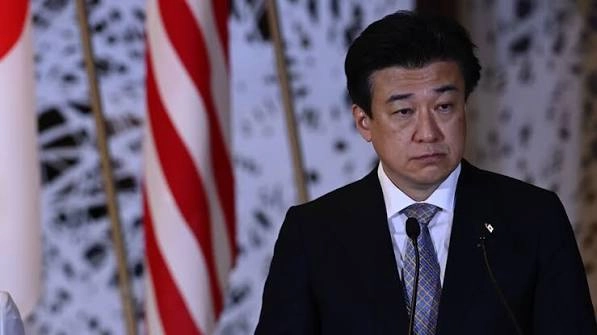
- Consultations with ICC Leadership: Chief Cabinet Secretary Minoru Kihara confirmed that Tokyo is in close consultation with ICC President Tomoko Akane, a distinguished Japanese national, alongside international partner nations.
- Defense of Judicial Independence: The policy move follows Tomoko Akane’s address to the United Nations General Assembly, where she strongly criticized Washington’s sanctions as a direct threat to global judicial independence.
- U.S. Sanctions Escalation: The administration of U.S. President Donald Trump imposed formal sanctions on the ICC on October 9, following prior restrictive measures targeting court judges and prosecutors, including Akane.
- Geopolitical Alliance Test: The situation places Japan—a vital security ally of Washington and a major financial contributor to The Hague-based tribunal—at the center of a complex diplomatic balancing act regarding international law.
Japan (Japan Daily News) November 4, 2026 – The Japanese government announced on Wednesday that it is evaluating potential financial assistance measures for the International Criminal Court (ICC), following the implementation of sweeping economic sanctions by the United States administration under President Donald Trump. As reported by diplomatic correspondents for Anadolu Agency alongside political reporting from The Japan Times and international wire services, Chief Cabinet Secretary Minoru Kihara stated during a press briefing in Tokyo that Japanese authorities are examining supportive fiscal mechanisms while conducting ongoing consultations with ICC President Tomoko Akane—a prominent Japanese national heading the tribunal—and other international member states. Kihara reaffirmed Tokyo’s unwavering diplomatic commitment to upholding international law and supporting the judicial mandate of the court. The announcement directly responds to escalating tensions between Washington and The Hague after Akane used her annual address to the United Nations General Assembly on Monday to warn that U.S. sanctions threaten the fundamental independence of international justice.
- Key Points:
- What did Chief Cabinet Secretary Minoru Kihara state regarding financial assistance?
- How did ICC President Tomoko Akane respond to Washington’s sanctions at the UN?
- What is Japan’s historical and financial role within the International Criminal Court?
- Background of U.S.-ICC Tensions and Institutional Sanctions
- Japanese Diplomacy, Allied Relations, and ICC Funding Resilience
What did Chief Cabinet Secretary Minoru Kihara state regarding financial assistance?
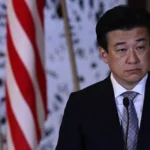
As reported by parliamentary and diplomatic reporters covering the Prime Minister’s Office in Tokyo, Chief Cabinet Secretary Minoru Kihara addressed the media regarding Japan’s official response to the punitive measures levied against The Hague-based tribunal.
During his regular press conference, Kihara outlined the administration’s deliberative process, emphasizing that Tokyo is consulting closely with ICC leadership and international partners.
As captured in official briefing records, Chief Cabinet Secretary Minoru Kihara stated:
“Japan is examining possible financial measures while maintaining consultations with ICC President Tomoko Akane and other countries.”
Kihara reaffirmed the Japanese government’s institutional stance, emphasizing that Tokyo remains steadfast in supporting the court’s core mission and upholding international legal frameworks, despite the diplomatic friction introduced by Washington’s sanctions policy.
How did ICC President Tomoko Akane respond to Washington’s sanctions at the UN?
As reported by United Nations correspondents covering the General Assembly in New York, ICC President Tomoko Akane used her formal annual report on Monday to condemn the escalating economic and travel restrictions imposed by the United States.
Akane warned delegates that the sweeping measures target the very fabric of global accountability mechanisms.
Addressing the UN General Assembly, ICC President Tomoko Akane stated:
“The restrictions threaten judicial independence and urge member states to take concrete measures to protect the court.”
The confrontation follows a series of escalating actions by Washington. On October 9, the U.S. administration formalized direct sanctions against the ICC as an institution, building upon prior executive actions and visa restrictions targeting specific court judges and prosecutors, including Akane herself. The United States—which is not a state party to the Rome Statute establishing the ICC—has consistently opposed the tribunal asserting jurisdiction over non-member nationals, particularly concerning investigations involving U.S. military personnel and allied officials such as Israeli Prime Minister Benjamin Netanyahu and former Defense Minister Yoav Gallant.
What is Japan’s historical and financial role within the International Criminal Court?
As reported by international legal affairs analysts for The Japan Times and global diplomatic desks, Japan occupies a unique structural position as one of the largest financial contributors to the ICC outside of Europe.
Since ratifying the Rome Statute, Tokyo has consistently maintained robust diplomatic and financial support for the tribunal, viewing the institution as a cornerstone of the post-Second World War international rules-based order.
However, Japan’s robust commitment to the ICC creates a delicate diplomatic tightrope:
- U.S. Security Alliance: The United States remains Japan’s primary bilateral security ally under the Treaty of Mutual Cooperation and Security, anchoring Japan’s regional defense strategy in the Indo-Pacific.
- Multilateral Commitment: Tokyo concurrently champions multilateralism, human rights enforcement, and the authority of international tribunals such as the International Court of Justice (ICJ) and the ICC.
Diplomatic observers note that providing direct financial assistance to offset U.S. sanctions risks drawing diplomatic rebukes from Washington, whereas failing to support the court could undermine Japan’s credibility as a champion of international jurisprudence.
Background of U.S.-ICC Tensions and Institutional Sanctions
The friction between the United States and the International Criminal Court spans multiple presidential administrations, intensifying significantly over investigations into alleged war crimes in Afghanistan and the Palestinian territories. The ICC, established in 2002 and based in The Hague, Netherlands, operates as a court of last resort mandated to prosecute individuals for genocide, war crimes, crimes against humanity, and the crime of aggression when national legal systems are unwilling or unable to genuinely prosecute them.
Under President Donald Trump’s administration, Washington adopted an aggressively adversarial posture toward the tribunal, utilizing executive orders to freeze assets and impose travel bans on court officials. The issuance of ICC arrest warrants for high-ranking Israeli officials—including Prime Minister Benjamin Netanyahu and former Defense Minister Yoav Gallant—regarding military actions in Gaza further inflamed tensions, prompting renewed legislative and executive threats from Washington aimed at dismantling or marginalizing the court’s operations.
Japanese Diplomacy, Allied Relations, and ICC Funding Resilience
The Japanese government’s consideration of financial assistance to the U.S.-sanctioned ICC is predicted to shape bilateral diplomatic negotiations, multilateral funding frameworks, and international legal resilience through the remainder of 2026 and into 2027.
For the International Criminal Court and its administrative leadership, Tokyo’s active deliberation is predicted to provide critical financial buffering against budgetary shortfalls caused by U.S. asset freezes and banking restrictions. As other middle-power signatories monitor Japan’s approach, additional state parties to the Rome Statute are predicted to consider supplemental voluntary contributions to safeguard judicial operations in The Hague.
For Japanese foreign policy planners and diplomats in Tokyo, navigating this friction will require delicate bilateral communication with Washington to prevent trade or security retaliations while demonstrating fidelity to international law. Analysts predict that Japan will likely structure its financial assistance through transparent, multi-donor trust funds or administrative capacity-building grants that reinforce institutional resilience without explicitly provoking direct diplomatic escalation with the White House.