Key Points:
- 80th Anniversary Milestone: Japan marked 80 years since the promulgation of its 1946 Constitution on Tuesday, 3rd November 2026, amid intensifying national debate over amending the supreme law.
- Proposed Emergency Clause: Legal scholars, disaster management experts, and lawmakers remain divided over whether to introduce a state-of-emergency clause expanding central government authority during major national catastrophes.
- Catastrophic Risks: Proponents argue that an emergency clause is vital to prepare for impending major disasters, including a potential high-magnitude earthquake striking directly beneath the Tokyo metropolitan area or along the Nankai Trough.
- Concerns Over Power Concentration: Constitutional lawyers and civil liberties advocates warn that a constitutional emergency clause could lead to an excessive concentration of executive authority and erode democratic checks.
- Operational and Budgetary Bottlenecks: Former Cabinet Office officials point to historical precedents such as the 2011 Great East Japan Earthquake, highlighting how rigid budgetary earmarks forced extralegal emergency responses.
Japan (Japan Daily News) November 3, 2026 – Japan officially marked the 80th anniversary of the promulgation of its postwar Constitution on Tuesday, November 3, 2026, amid a renewed and contentious national debate regarding whether to introduce an emergency clause into the supreme law. As reported by political affairs correspondents for The Japan Times, constitutional scholars, legal experts, and disaster management specialists are sharply divided over proposals to temporarily grant the central government expanded executive powers during large-scale national emergencies. While advocates contend that an emergency framework is essential to ensure swift, cross-agency coordination in the event of catastrophic earthquakes beneath Tokyo or along the Nankai Trough, opponents warn that altering the unamended 1946 charter risks over-centralizing power and weakening democratic safeguards.
- Key Points:
- Why are disaster management experts calling for a constitutional emergency clause in Japan?
- Why are constitutional lawyers cautious about introducing an emergency clause?
- What lessons from the 2011 Great East Japan Earthquake inform the emergency debate?
- Background of Japan’s 1946 Constitution and the Emergency Clause Controversy
- Constitutional Debate, Legislative Reforms, and Disaster Preparedness
Why are disaster management experts calling for a constitutional emergency clause in Japan?
As reported by political correspondents for The Japan Times, proponents of constitutional revision maintain that Japan’s current statutory framework is insufficient to handle mega-disasters requiring rapid, multi-agency mobilization.
Disaster management specialists point out that major seismic hazards—such as a direct hit on the Tokyo metropolitan region or a mega-thrust earthquake in the Nankai Trough off central and western Japan—would immediately overwhelm localized emergency services.
Underlining the limitations of existing statutory mechanisms, Yoshiaki Kawata, a professor at Kansai University specializing in major natural disasters, stated that “existing laws alone may not be sufficient in certain cases” because large-scale catastrophes demand coordinated responses across multiple government ministries and public agencies.
Professor Kawata noted that although the Disaster Management Basic Law contains provisions for a disaster-related state of emergency, activating those clauses requires lengthy inter-agency consultation.
Addressing the dangers of administrative delays during major disasters, Yoshiaki Kawata stated:
“Damage will continue to spread in the meantime.”
To eliminate operational delays, Professor Kawata called for establishing a constitutional mechanism wherein a state-of-emergency clause automatically applies when a disaster exceeds specific pre-determined damage criteria.
He added that implementing a system enabling the Prime Minister to make swift executive decisions based on direct expert guidance is necessary to safeguard public safety during complex crises.
Why are constitutional lawyers cautious about introducing an emergency clause?
As reported by legal affairs writers for The Japan Times, constitutional scholars and civil rights lawyers strongly urge caution, arguing that Japan’s 1946 Constitution deliberately omitted emergency powers to protect democratic governance.
Opponents of the amendment assert that existing statutory frameworks provide adequate authority without altering the core constitutional balance of power.
Explaining the historical context behind the drafting of the supreme law, Koju Nagai, a lawyer specializing in constitutional revision, noted that an emergency clause was intentionally excluded when the document was established to prevent the government from concentrating executive power during crises.
Lawyer Koju Nagai stated that specific individual statutes, such as the Disaster Management Basic Law, clearly define government authority and emergency procedures tailored to individual scenarios, making them “less prone to abuse of power”.
Emphasizing the vital role of local government bodies in immediate disaster response, Koju Nagai stated:
“Municipalities are best equipped to respond effectively to disasters because they have the most detailed understanding of the situations in affected areas.”
Nagai added that legal mechanisms are already embedded within current law allowing prefectural authorities and the central government to assume municipal responsibilities if local administrations become incapacitated, making the enhancement of existing systems preferable to constitutional change.
What lessons from the 2011 Great East Japan Earthquake inform the emergency debate?
As reported by institutional reporters for The Japan Times, former senior administrators involved in past disaster responses highlight severe logistical and financial hurdles encountered during real-world catastrophes.
Reflecting on past disaster relief operations, Akira Kotaki, a visiting professor at Kokushikan University who headed disaster management at the Cabinet Office during the March 2011 Great East Japan Earthquake and tsunami, cited major administrative obstacles to immediate action.
Professor Kotaki recalled that when the central government worked to procure and transport critical emergency supplies immediately following the 2011 disaster, necessary operational funds had not been allocated within the state’s initial annual budget.
Describing the regulatory workarounds required to execute emergency logistics at the time, Akira Kotaki stated:
“It was an extralegal decision to engage in such operations.”
Kotaki explained that disaster relief expenses were only covered after the fact using state reserve funds and subsequent parliamentary appropriations.
Warning of potential future risks if emergency financial powers are not clearly codified, Akira Kotaki observed:
“A swift initial response could be difficult even if an unexpected major disaster occurs in the future if reserve funds prove insufficient and the government has to wait for the enactment of a supplementary budget.”
However, Kotaki emphasized that if government authority is expanded through constitutional or statutory means, strict democratic checks must be implemented simultaneously.
He suggested requiring hard time limits on expanded executive powers alongside mandatory ex post facto parliamentary approval, concluding:
“The question is how we should strike a balance between people’s safety and rights.”
Background of Japan’s 1946 Constitution and the Emergency Clause Controversy
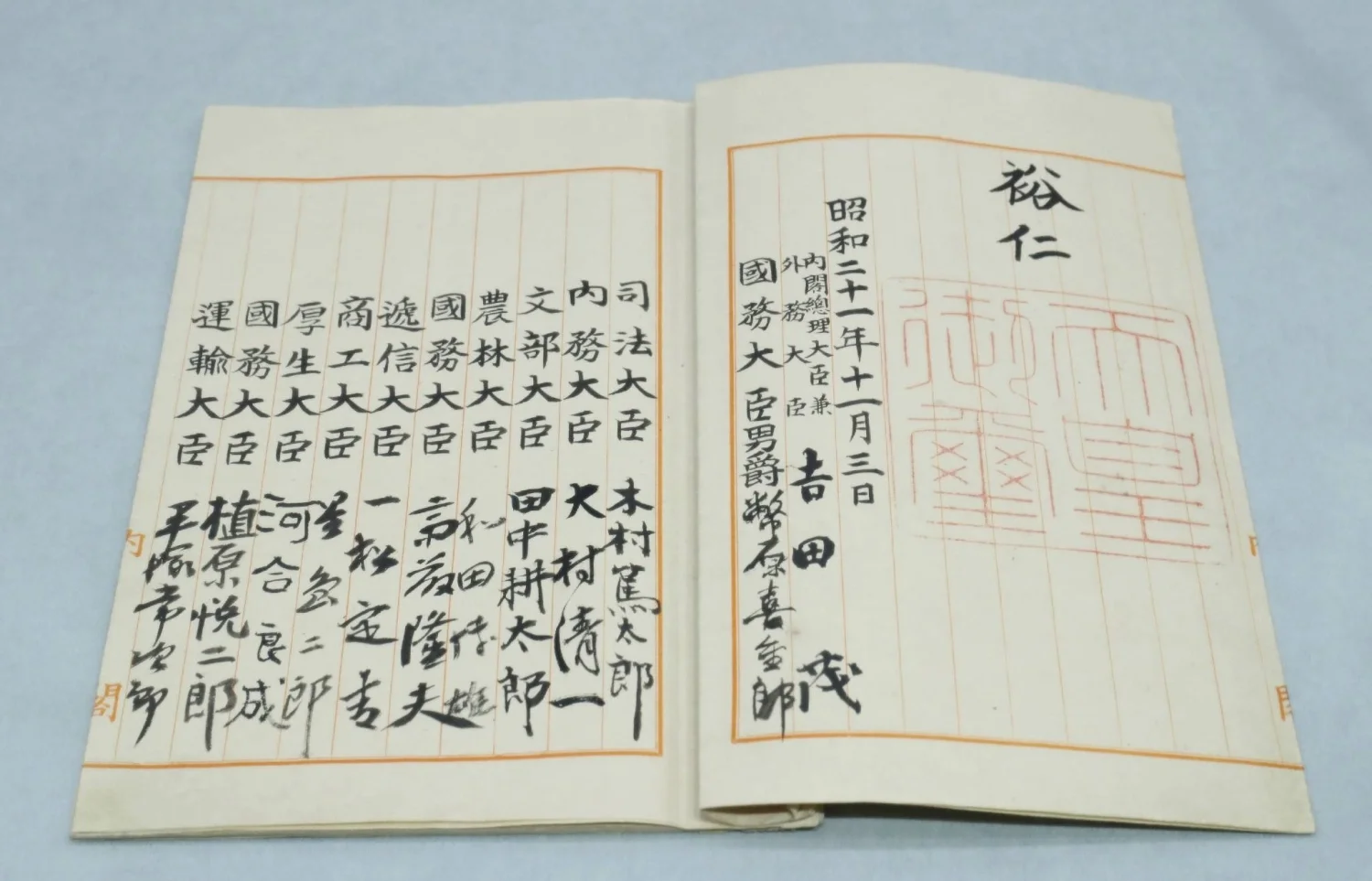
Promulgated on November 3, 1946, and taking effect on May 3, 1947, the Constitution of Japan has remained entirely unamended for 80 years. Drafted during the Allied occupation following World War II, the document established popular sovereignty, fundamental human rights, and Article 9, under which Japan renounced war as a sovereign right. Unlike many modern constitutions, Japan’s supreme law does not contain explicit state-of-emergency provisions granting executive decree powers or suspending civil liberties during wartime or natural disasters. This omission reflected the drafters’ deliberate intent to prevent a return to pre-war authoritarian governance under the Meiji Constitution.
Over the past two decades, political debate surrounding constitutional revision has expanded beyond Article 9 to focus heavily on emergency management. Proponents of revision, including leaders within the ruling Liberal Democratic Party (LDP), argue that modern threats—ranging from devastating earthquakes to global pandemics and regional security crises—require an explicit constitutional framework to extend Diet members’ terms during crises and centralize executive command. Conversely, opposition parties, legal scholars, and bar associations contend that statutory revisions to existing disaster management and civil protection laws provide sufficient legal authority while safeguarding constitutional liberties.
Constitutional Debate, Legislative Reforms, and Disaster Preparedness
The ongoing debate over introducing an emergency clause as Japan marks 80 years of its Constitution is predicted to shape parliamentary proceedings, legislative drafting, and national disaster management policies throughout 2027 and beyond.
For the Japanese electorate and civic organizations, the emergency clause debate will remain a central focal point of political discussion. Because any constitutional amendment requires a two-thirds majority in both houses of the National Diet followed by a national referendum, lawmakers are predicted to prioritize consensus-building around disaster management protocols rather than broader security amendments. Public opinion is likely to support targeted statutory enhancements over sweeping constitutional changes if voters perceive that executive powers could impinge on civil liberties.
For government policymakers, emergency planners, and municipal authorities, administrative reform is predicted to advance through statutory updates even if constitutional revision stalls in the Diet. In the near term, the government is expected to introduce amendments to the Disaster Management Basic Law to streamline inter-agency budgeting, pre-authorize emergency procurement, and expand reserve fund allocations. These measures aim to address the financial and logistical bottlenecks identified by experts like Akira Kotaki, ensuring that Japan remains prepared for major seismic events without exposing its democratic framework to constitutional vulnerability.