
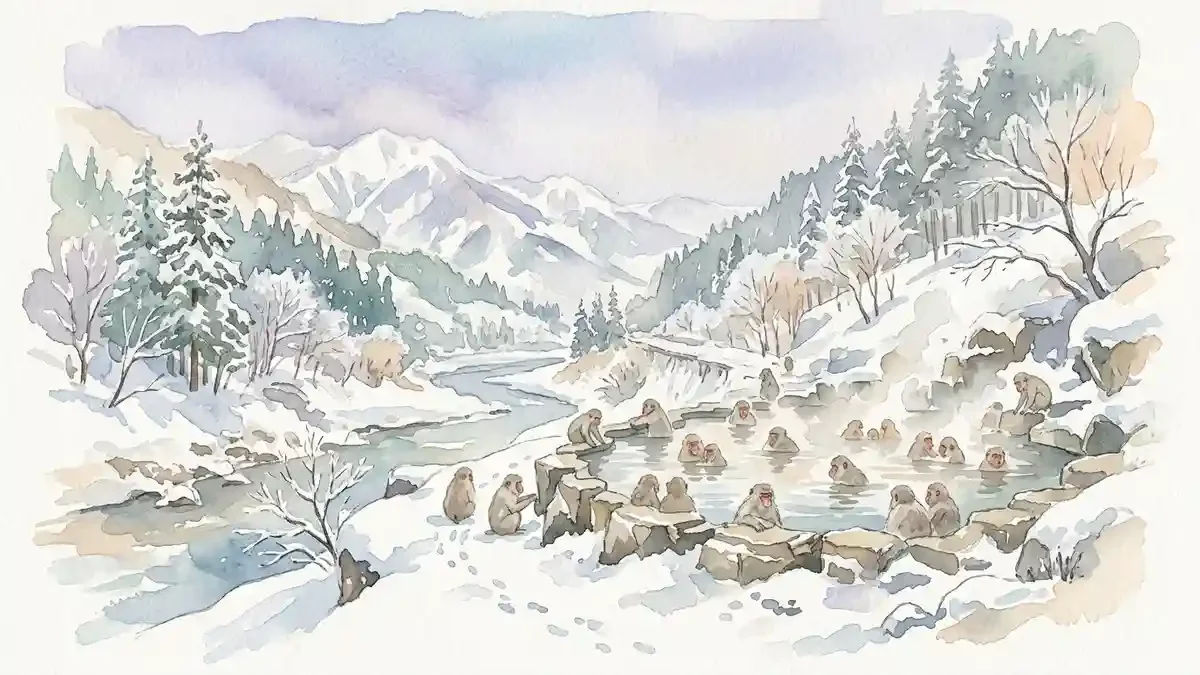
- The operator of Jigokudani Monkey Park (Jigokudani Yaen-koen) in Yamanouchi, Japan, will officially revise its admission fees effective December 1, 2026, aligning with the onset of the peak winter tourism season.
- Jigokudani Yaen-koen operates 365 days a year without set business holidays, though natural conditions such as weather, wild macaque behaviour, or natural disasters can occasionally lead to unannounced closures or shortened hours.
- To manage winter crowds effectively, the park operator implements a priority online visitor access system running from December through April.
- Situated at an altitude of 850 metres within the Yokoyu River valley—originating in Shiga-Kogen within Joshinetsu-Kogen National Park in northern Nagano Prefecture—the park has welcomed visitors to observe wild Japanese macaques since its establishment in 1964.
- Access to the viewing area requires navigating a forest trail featuring unpaved ground, steps, and uneven surfaces (making wheelchairs and carts unsuitable), reached via public transport connections through Yudanaka Station and the Snow Monkey Park bus stop or by drivers parking near the Kanbayashi Hot Springs area.
Japan (Japan Daily News) November 14, 2026 – The operator of the world-famous Jigokudani Monkey Park in Yamanouchi, Japan, has announced an upcoming revision to its admission fees, taking effect on December 1, 2026. Arriving just as the winter season commences, the administrative update coincides with the implementation of priority access protocols for online ticket holders from December through April. Located 850 metres up in the Yokoyu River valley within Joshinetsu-Kogen National Park, the historic wildlife sanctuary—established in 1964—draws international visitors to watch wild Japanese macaques frequent its iconic hot-spring pool. While official guides advise travellers to check the operator’s updated pricing prior to arrival, visitors must also prepare for unpaved forest walking trails that remain inaccessible to wheelchairs and strollers.
- How Do Winter Operations and Online Priority Access Shape Visits to Jigokudani Monkey Park?
- What Are the Terrain and Public Transport Requirements for Reaching the Park Approach?
- Background of the Particular Development After the News
- Prediction: How This Development Can Affect Winter Tourists, Tour Operators, and Regional Tourism in Nagano
As reported by tourism correspondents and official park visitor guides, the management of Jigokudani Monkey Park (Jigokudani Yaen-koen) in Yamanouchi, Nagano Prefecture, will revise its admission fee structure starting December 1, 2026. The timing of the price adjustment provides an important operational update for travellers planning winter excursions to see the prefecture’s celebrated snow monkeys.
Although the park’s official visitor guide confirms that admission fees will change on December 1, exact numerical pricing details are subject to the operator’s real-time ticketing portal. Consequently, travel coordinators recommend that prospective visitors verify the latest ticket tariffs directly through the official operator channels before embarking on their journey.
The official guide further notes that Jigokudani Monkey Park maintains no set business holidays, remaining open to the public year-round. However, park management emphasises that environmental factors—including severe winter weather, shifts in wild macaque behaviour, or natural disasters—can occasionally necessitate temporary shortened operating hours or sudden closures without prior notice. As a result, consulting the official visitor guide remains essential for confirming daily operational status following the December fee revision.
How Do Winter Operations and Online Priority Access Shape Visits to Jigokudani Monkey Park?
Travel guides and park management details outline how seasonal conditions and ticketing policies affect tourist access:
- Observation Focus: The site is a natural observation area for wild Japanese macaques rather than a human bathing facility. Staff maintain a regulated feeding routine to encourage troop presence, though wild animals may occasionally fail to appear on certain days.
- Online Visitor Priority: To manage high-volume winter tourism, the operator grants priority entry to online visitors during the peak winter access window from December through April.
- Geographic Setting: Situated at an altitude of 850 metres in the Yokoyu River valley, originating in Shiga-Kogen and forming part of Joshinetsu-Kogen National Park in northern Nagano Prefecture.
- Historical Establishment: Founded in 1964, featuring its famous hot-spring pool as the central attraction for observing macaque behaviour.
What Are the Terrain and Public Transport Requirements for Reaching the Park Approach?
Official access documentation highlights the physical and logistical considerations required to reach the mountain sanctuary:
- Terrain Restrictions: There are no paved roads running through the park or along the entire forest approach. Routes consist of unpaved ground, stairs, and uneven natural surfaces.
- Accessibility Limitations: Due to the rugged forest terrain, wheelchairs, strollers, and carts cannot access either the trail or the park grounds.
- Public Transport Route: Visitors using public transit travel via Yudanaka Station, Nagano Dentetsu rail services, and the Snow Monkey Park bus stop, followed by a final walk on foot through the forest.
- Driving Route: Motorists park in the Kanbayashi Hot Springs area before continuing on foot along the mountain trail to the park entrance.
Background of the Particular Development After the News
Jigokudani Monkey Park was established in 1964 in the rugged terrain of northern Nagano Prefecture as a dedicated observation site for troop dynamics among wild Japanese macaques (Macaca fuscata). Over six decades, the spectacle of wild monkeys bathing in natural hot springs during freezing winter conditions has transformed the remote valley into one of Japan’s premier international wildlife tourism destinations.
In response to surging visitor numbers and post-pandemic tourism recovery, heritage and wildlife sites across Japan have increasingly adopted digitized ticketing frameworks. Implementing priority online booking systems during peak winter months allows operators to regulate visitor flow, reduce ticket-counter congestion in sub-zero mountain weather, and balance conservation priorities within the protected confines of Joshinetsu-Kogen National Park.
Prediction: How This Development Can Affect Winter Tourists, Tour Operators, and Regional Tourism in Nagano
The upcoming admission fee revision and winter online priority protocols are projected to influence key stakeholders across the tourism sector:
1. Improved Visitor Flow and Reduced Queue Times for Independent Travellers
For international tourists and winter holidaymakers visiting Nagano, the mandatory shift toward online priority ticketing is expected to streamline entry procedures and reduce waiting times in freezing conditions at the mountain gateway.
2. Streamlined Itinerary Planning for Regional Tour Operators and Travel Agencies
For domestic and inbound tour operators organising excursions from Tokyo or Nagano City, advance notice of fee revisions and digital booking requirements allows agencies to update pricing packages and secure timely reservations for client groups.
3. Enhanced Visitor Preparedness Regarding Trail Accessibility and Weather Realities
For travellers anticipating a straightforward tourist attraction, clearer administrative communications regarding the rugged 850-metre unpaved forest approach will encourage appropriate footwear and realistic expectations for visitors with mobility considerations.