
- Aster Pivots From Auto Parts to Drones: Japanese manufacturer Aster—which long supplied parts for Toyota vehicles—now makes electric motors powering drones built by US military technology firm Anduril, with defence work rising to one-tenth of its revenue since entering the sector in 2025 as Chief Executive Takenobu Hongo said automotive motors are currently not very profitable.
- Tokyo and ATLA Back Supply-Chain Shift: Prime Minister Sanae Takaichi’s government—which pledged a new security strategy by year-end 2026 including a defence industry road map—is tapping automotive supply chains alongside the Acquisition, Technology & Logistics Agency (ATLA), cabinet advisor Koko Kato (who oversaw February 2026 changes to a trade ministry diversification programme), and a Tokyo matching event in September 2026 that drew 48 Japanese companies, double the prior year.
- Drone Push and Export Gap: ATLA launched a funding programme in October 2026 for developing and testing new military technology—including unmanned aerial vehicle (UAV) components—as Japan seeks fleets of attack and interceptor drones while exporting just over 1,100 drones in 2025 compared with roughly 123,000 exported by Taiwan.
- Suppliers and Drone Makers Expanding: Engine-component maker Kyowa Industrial saw defence sales climb from 3% in spring 2025 to 10% of annual sales in 2026 amid prototype drone engine orders; racing-parts maker Kaaz is developing military drone engines after consulting ATLA; agricultural UAV startup Ishikawa Energy Research in Ota sources over 50% of drone components from Subaru’s local auto supply chain; and Subaru expects defence demand to grow.
- Big Three Hesitancy and Supplier Friction: Major automakers Toyota, Honda, and Nissan have shown little appetite for a defence pivot—with senior Toyota executive Hiroyuki Ueda stating earlier in November 2026 that Toyota’s basic position at that point is not to do defence-related work, while Mitsubishi Electric CFO Kenichiro Fujimoto noted automaker resistance to suppliers taking outside work.
Japan (Japan Daily News) November 24, 2026 – Japanese manufacturer Aster—historically a supplier of parts for Toyota vehicles—now produces electric motors for drones built by US defence technology firm Anduril, generating a tenth of its revenue in defence as Tokyo draws auto suppliers into its largest military buildup since World War Two. Supported by the Acquisition, Technology & Logistics Agency and Prime Minister Sanae Takaichi’s administration, smaller parts makers are expanding into drone and defence work even as major automakers remain cautious.
- How Are Tokyo, ATLA, and Koko Kato Encouraging Auto Suppliers to Enter Defence?
- Which Drone Makers and Auto Parts Suppliers Are Expanding Into Military Systems?
- Why Are Major Automakers Hesitant While Smaller Suppliers Shift Toward Defence?
- How Do the Key Companies, Figures, and Roles Compare?
- Background of the Particular Development After the News
- How This Development Can Affect Auto Suppliers, Automakers, and Defence Buyers
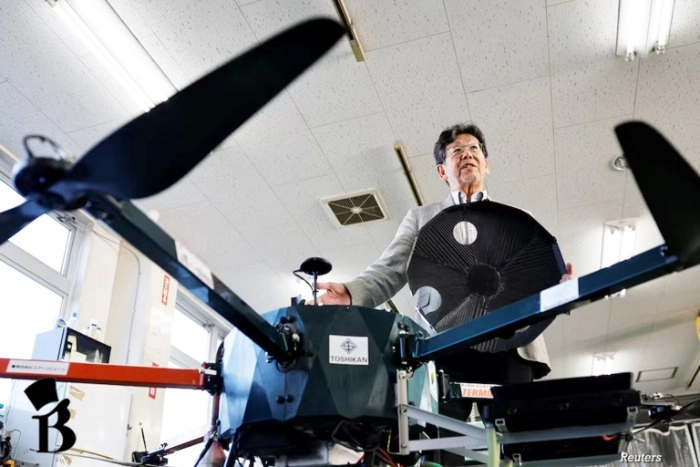
As reported by Reuters journalists Tim Kelly, John Geddie, Daniel Leussink, and Maki Shiraki (with additional reporting by Nobuhiro Kubo and Tom Bateman), Japanese manufacturer Aster for years made its money supplying parts for Toyota vehicles, but as the country’s auto industry struggles amid fierce Chinese competition, Aster has established a new niche in defence technology.
Aster’s electric motors power drones manufactured by US military technology company Anduril, and defence work has expanded to one-tenth of its revenue since entering the sector in 2025. As reported by Tim Kelly, John Geddie, Daniel Leussink, and Maki Shiraki of Reuters, Aster chief executive Takenobu Hongo stated: “Drones are a much better business. At the moment, for us, automotive motors aren’t very profitable.”
How Are Tokyo, ATLA, and Koko Kato Encouraging Auto Suppliers to Enter Defence?
Interviews conducted by Reuters with nine people—including government officials, company executives, and an advisor to Prime Minister Sanae Takaichi’s cabinet—detail how state bodies are linking automotive manufacturing with defence production:
- Strategic Rationale and Supply Chains: Prime Minister Sanae Takaichi’s government aims to use existing industrial supply chains to accelerate Japan’s security transformation as it strengthens defences against regional threats from nuclear-armed neighbours China, Russia, and North Korea, backed by the United States. The shift also provides a diversification path as Japan’s factories produced nearly 900,000 fewer vehicles in 2025 than a decade earlier, according to the Japan Automobile Manufacturers Association.
- ATLA Evaluation, Pairing, and February Programme Changes: The Acquisition, Technology & Logistics Agency (ATLA), which oversees defence ministry procurement, has evaluated suppliers such as Aster, paired them with arms manufacturers, and introduced new funding streams. ATLA stated in response to Reuters questions that it acts as a point of contact for companies entering the defence industry and will continue working with other government departments to encourage new entrants, while Takaichi’s office did not respond to questions. Cabinet advisor Koko Kato told Reuters she oversaw changes in February 2026 to a separate trade ministry programme designed to help auto suppliers diversify into defence and other industries, adding that where synergy exists between defence and autos, carmakers “should take the opportunity”.
- Manufacturing Scale and Western Supply Needs: Although Japan’s auto output has declined, it remains the world’s third-largest vehicle producer, building more than 8 million vehicles annually and supporting one in 10 jobs across roughly 70,000 component suppliers. Former Stellantis Japan CEO and auto adviser Pontus Haggstrom noted that automotive precision manufacturing, electronics, quality control, and reliable large-scale production apply to arms manufacturing. Demand is also rising as US defence manufacturers work to replenish stockpiles drawn down by conflicts in the Middle East and Europe, with Japan receiving about a tenth of US weapons exports between 2021 and 2025 according to the Stockholm International Peace Research Institute. ATLA hosted an event in Tokyo in September 2026 connecting Japanese suppliers with potential US and European military buyers, drawing about 48 Japanese companies—twice as many as the previous year.
Which Drone Makers and Auto Parts Suppliers Are Expanding Into Military Systems?
Reporting from Reuters highlights how unmanned aerial vehicle (UAV) programmes and automotive parts suppliers are converging in Japan’s defence push:
- October ATLA Funding and Drone Export Gap: In October 2026, ATLA launched a funding programme supporting the development and testing of new military technology, including UAV components, offering millions of dollars to projects reaching prototype development as Tokyo prepares a year-end national security strategy expected to include plans for attack and interceptor drones. By contrast, Japan exported just over 1,100 drones in 2025 versus roughly 123,000 exported by Taiwan, according to trade figures compiled by Taiwan’s Research Institute for Democracy, Society and Emerging Technology, though an official familiar with budget plans said drone spending is likely to be ringfenced even if fiscal pressures prompt re-evaluations of some missile and aircraft orders.
- Kyowa Industrial, Kaaz, and Terra Drone: Car-engine component supplier Kyowa Industrial has received growing prototype drone engine orders, lifting its defence business from 3% of annual sales in spring 2025 to 10% in 2026; as reported by Tim Kelly, John Geddie, Daniel Leussink, and Maki Shiraki of Reuters, Kyowa Industrial chief executive Hiroko Suzuki stated: “Customers tell us their traditional suppliers don’t have the capacity.” Terra Drone chief executive Toru Tokushige said ATLA officials recently introduced him to racing-car parts maker Kaaz—which developed a small gasoline-powered aircraft engine—adding that tapping auto suppliers could substantially boost Japan’s drone-building capacity, while a Kaaz spokesperson confirmed consultations with ATLA and active development of military drone engines.
- Ishikawa Energy Research and Subaru: In Ota, agricultural UAV startup Ishikawa Energy Research—which attended ATLA’s September 2026 forum—sources more than 50% of its drone components from the local auto supply chain serving Subaru, with founder and former Honda engineer Mitsuru Ishikawa saying his gasoline-powered drones can carry heavier defence payloads or fly longer reconnaissance missions than battery-powered models. A Subaru spokesperson said the company expects defence-related demand to grow and intends to capture those business opportunities, without providing specific forecasts.
Why Are Major Automakers Hesitant While Smaller Suppliers Shift Toward Defence?
Five officials and analysts told Reuters that the move into defence contracting is currently concentrated among smaller parts manufacturers rather than Japan’s largest carmakers:
- Toyota, Honda, and Nissan: Japan’s big three automakers—Toyota, Honda, and Nissan—have shown little inclination to pivot toward defence, given significant business interests in China (which has criticised Japan’s arms buildup) and long-standing caution over reputational risks in a society shaped by decades of postwar pacifism. As reported by Tim Kelly, John Geddie, Daniel Leussink, and Maki Shiraki of Reuters, senior Toyota executive Hiroyuki Ueda stated at a results briefing earlier in November 2026: “The company’s basic position at this point is that we will not do anything related to defense.” Nissan declined to comment on potential defence work, while Honda said it has no specific plans to enter the sector.
- Supplier Loyalty and Factory Reception: Mitsubishi Electric chief financial officer Kenichiro Fujimoto told Reuters his company is pursuing a new military drone venture and sees logic in using auto supply chains, but noted resistance from automakers toward suppliers taking non-auto work—stating: “There’s this odd attitude sometimes, like, ‘Don’t do any work other than ours.’” Meanwhile, Aster’s 71-year-old chief executive Takenobu Hongo said he was concerned about possible pushback when he gathered his roughly 100 workers at the Yokote factory in November 2025 to share news that Anduril wanted their motors, but instead received a positive reaction (“Everyone was more like: ‘Wow, that’s impressive!’”) and predicted growing security awareness and commercial demand would draw more firms in: “In Japan now, there are very few people who think this is somebody else’s problem.”
How Do the Key Companies, Figures, and Roles Compare?
A structured summary outlines the principal organisations, individuals, and metrics reported in the story:
| Company / Entity | Role / Sector | Key Figures & Reported Details |
| Aster (Takenobu Hongo) | Electric motor / auto parts maker in Yokote | Supplies motors for Anduril drones; defence reached ~10% of revenue since entering in 2025; ~100 staff. |
| ATLA & Takaichi Cabinet (Koko Kato) | Defence procurement agency & government | Launched October 2026 defence tech funding; September 2026 Tokyo event drew 48 firms (2x prior year); February 2026 trade programme update. |
| Kyowa Industrial (Hiroko Suzuki) | Car-engine component supplier | Defence work rose from 3% of annual sales in spring 2025 to 10% in 2026 on prototype drone engine orders. |
| Kaaz, Terra Drone & Ishikawa Energy Research | Racing parts, drone maker & UAV startup | Kaaz developing military drone engines with ATLA ties; Ishikawa Energy Research sources over 50% of drone parts from Subaru’s Ota supply chain. |
| Toyota, Honda, Nissan & Subaru | Automakers | Toyota, Honda, and Nissan show little appetite for defence and hold major China business; Subaru already builds military aircraft and expects defence demand to grow. |
Background of the Particular Development After the News
Following its defeat in World War Two, Japan adopted decades of postwar pacifism and restrictions on military exports and arms production, while building an automotive sector that still produces over 8 million vehicles annually across roughly 70,000 component suppliers. Over the past decade, domestic vehicle output has faced pressure—falling by nearly 900,000 units in 2025 compared with 10 years earlier—alongside heightened competition from Chinese automakers.
At the same time, security tensions involving China, Russia, and North Korea, US pressure on allies to raise defence spending, and global supply constraints in weapons manufacturing have prompted Prime Minister Sanae Takaichi’s administration and ATLA to expand industrial outreach, funding, and matchmaking into unmanned systems and defence components.
How This Development Can Affect Auto Suppliers, Automakers, and Defence Buyers
Drawing smaller automotive parts manufacturers into drone and defence supply chains carries practical implications across key groups:
1. Tier-Two and Tier-Three Automotive Parts Suppliers
For smaller component makers facing slimmer margins in traditional auto parts, defence contracts and ATLA-backed programmes offer an alternative revenue stream, though suppliers must navigate potential pushback from primary automaker customers as well as defence quality and certification requirements.
2. Major Japanese Automakers and Domestic Drone Builders
For major automakers with substantial operations in China—such as Toyota, Honda, and Nissan—maintaining commercial ties and managing reputational considerations will likely remain a central focus, while drone developers like Terra Drone and Ishikawa Energy Research can expand domestic component sourcing if automotive precision manufacturing scales up.
3. Japanese Defence Planners and Allied Contractors
For Japan’s defence planners and international defence contractors such as Anduril, integrating automotive production expertise can help expand drone and component capacity, provided technical integration, supplier willingness, and budget priorities align ahead of the year-end security strategy.